What wood modification is, and what it is not
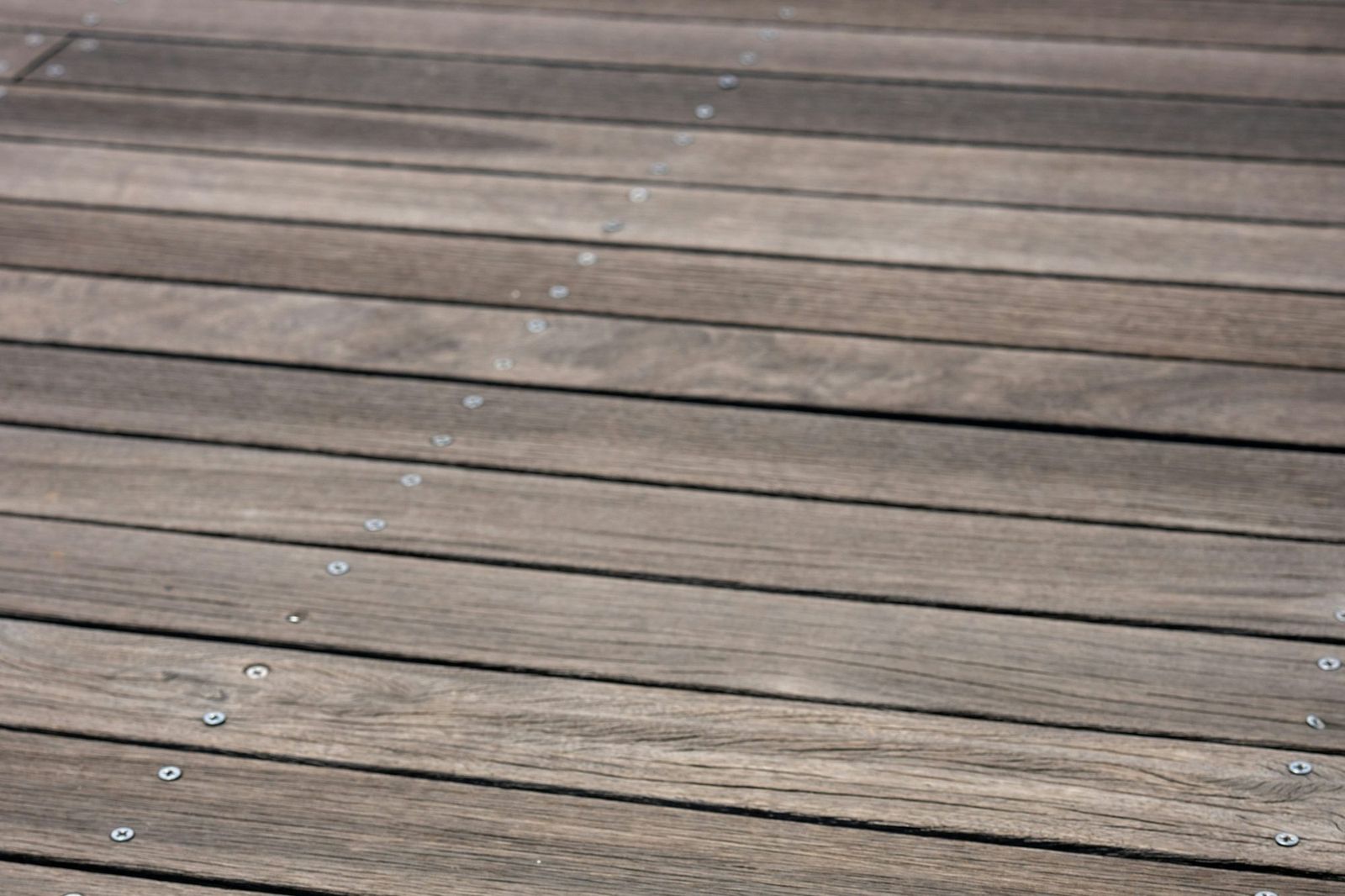
Wood modification changes the cell wall of the wood itself so that it absorbs less water and is no longer food for fungi. That sets it apart from preservative treatment, which adds a biocide that has to stay in the wood to work. A modified board can be cut, planed and profiled without exposing an untreated core, because the change runs through the whole cross-section.1,2
Three families of processes are on the market. Thermal modification uses heat alone and is by far the largest. Acetylation reacts the wood with acetic anhydride, and furfurylation fills the cell walls with a resin made from furfuryl alcohol. In Europe, thermally modified timber (TMT) is described by CEN/TS 15679, a technical specification that defines the product and its characteristics for interior and exterior uses such as cladding, flooring, decking, joinery and furniture. As of October 2026 it is still a technical specification from 2007, not a full EN standard, and it refers load-bearing uses back to the structural standards.5
How thermal modification works: heat, steam and very little oxygen
All thermal processes heat wood to well above drying temperatures while keeping oxygen away, so the wood changes chemically without burning. The review by Sandberg, Kutnar and Mantanis puts the working range above 160 °C, and lists the industrial processes by temperature, duration and the medium that protects the wood.1
- ThermoWood (Finland): 185–215 °C in a continuous flow of steam at atmospheric pressure, 30–70 hours including heating and cooling.
- Plato (Netherlands): a hydrothermal stage at 150–180 °C in saturated steam, followed by curing at 170–190 °C in heated air.
- Retification and Le Bois Perdure (France): 160–240 °C in nitrogen with at most 2% oxygen, or 200–230 °C in steam.
- Oil heat treatment (Germany): 180–220 °C in hot vegetable oil.
- Thermo-vacuum (Italy): 160–220 °C under reduced pressure.
The ThermoWood process in three phases
ThermoWood is the best documented process, so it serves as the example here. In phase 1 the kiln is heated quickly to 100 °C and then gradually to the treatment temperature; the wood dries to zero moisture content on the way. In phase 2 the temperature is held, for Nordic softwood in class Thermo-D at 212 °C. In phase 3 water sprays cool the load and steam brings the moisture content back to 4–7%, which makes the wood machinable again. A control system limits the temperature steps to keep the wood from cracking, with settings for each species and dimension.2
ThermoWood has two product classes. Thermo-S (stability) treats softwoods at 190 °C and hardwoods at 185 °C. Thermo-D (durability) treats softwoods and the hardwoods ash, ayous and frake at 212 °C, each within ±3 °C.2
What the heat does to the cell wall
Wood consists of cellulose (40–50%), hemicelluloses (25–35%), lignin (20–30%) and a few per cent of extractives. Hemicelluloses break down first, between 200 and 260 °C; cellulose between 240 and 350 °C. As the wood heats, acetic acid forms from the hemicelluloses and speeds up their breakdown. The result is a cell wall with fewer water-absorbing hydroxyl groups and less of the material that decay fungi feed on. Hardwoods contain more hemicelluloses than softwoods, so they react more readily.2
The same chemistry lowers the pH. ThermoWood measures about pH 4, against 4.5–5 for the untreated wood. That matters for coatings and metal fixings, as the section on working with modified wood explains.2
What changes: moisture, movement, colour and weight
The headline benefit is lower moisture uptake. On average, thermal modification roughly halves the equilibrium moisture content (EMC), the moisture level wood settles at in a given climate, and reduces swelling and shrinkage accordingly.1 VTT measurements on spruce treated at 220 °C showed the EMC halved, with the gap widening at higher humidity. Because decay fungi need wood moisture above about 20%, the producers point out that thermally modified wood stays well below that threshold at any air humidity.2
Other changes follow from the same process.
- Lighter. Mass loss can reach about 20%, depending on the process.1 In ThermoWood tests, ash fell from 625 kg/m³ to 554 kg/m³ in class Thermo-D.2
- Smaller. A nominal 25 × 125 mm board comes out about 3% smaller, at 24 × 121 mm, because the wood is dried to nearly zero.2
- Brown throughout. The colour goes right through the board, so a planed or cut surface matches the face. In sunlight, unprotected boards turn grey like any other wood.2
- Better insulating. Thermally modified Nordic softwood conducts heat 20–25% less than the untreated wood.2
- Smell, but fewer emissions. Treated wood has a smoky smell. VTT measured total volatile organic compounds of 1,486 µg/m²h for untreated pine, 828 after treatment at 180 °C and 235 after treatment at 230 °C.2
What it costs in strength
Heat that removes hemicelluloses also makes wood more brittle. The review literature agrees on the direction: bending strength falls, stiffness changes little, and impact strength and hardness drop.1 The ThermoWood handbook gives figures for ash, measured on small clear specimens to DIN 52186. Untreated ash had a bending strength of 112 N/mm². After Thermo-S treatment it was 106.9 N/mm², after Thermo-D 90.6 N/mm², and after treatment at 220 °C 75.9 N/mm². The modulus of elasticity stayed at or slightly above the untreated value.2
Show the data
| Thermo-S (185 °C) | Thermo-D (212 °C) | 220 °C | |
|---|---|---|---|
| Density | 90% | 89% | 84% |
| Bending strength | 95% | 81% | 68% |
| Modulus of elasticity | 112% | 110% | 107% |
| Brinell hardness (radial) | 88% | 79% | 73% |
Untreated reference: 625 kg/m³, 112.0 N/mm² bending strength, 12,056 N/mm² modulus of elasticity, 35.13 N/mm² Brinell hardness. Source: International ThermoWood Association (2021), ThermoWood Handbook, tables 5, 6 and 9 (bending and stiffness to DIN 52186 on 20 × 20 × 360 mm specimens; hardness to EN 1534).
Other strength properties fall further. In tests reported by the producers, impact bending strength of spruce treated at 220 °C dropped by about 25%, and splitting strength of spruce, pine and birch by 30–40%. Shear strength fell by up to 40% after treatment at 230 °C. Compression strength parallel to the grain, by contrast, did not fall.2
The practical rule is clear. ThermoWood is not sold as strength-graded timber, and its producers say it must not be used for load-bearing structures.2 A Swiss study of industrially produced thermally modified beech came to a similar conclusion: most strength properties dropped significantly while stiffness did not, the material broke in a brittle way with large scatter, and the authors did not recommend strongly modified beech for general structural use.6 For furniture parts this means generous cross-sections, care with thin tenons and short grain, and no thermo wood in parts that take shock loads, such as chair legs.
Durability: from EN 350 class 5 to class 2
EN 350 rates the natural durability of wood against decay fungi in five classes, from 1 (very durable) to 5 (not durable). The laboratory tests behind it include CEN/TS 15083-1 for wood-destroying basidiomycetes and CEN/TS 15083-2 for soft-rot fungi in soil.7 EN 335 defines use classes, from 1 (indoors, dry) to 5 (in seawater).8
Untreated ash and beech are class 5. The ThermoWood handbook places Thermo-D ash, pine and spruce in durability class 2, suitable for use class 3: outdoors, exposed to the weather but not in contact with the ground, as in cladding and garden structures. Thermo-S products sit in class 3, for use under a roof, such as saunas and covered outdoor furniture. The handbook does not recommend any ThermoWood product for direct contact with soil or water.2
Independent research shows how much depends on the treatment intensity. In a French study of ash (Fraxinus excelsior) modified at 170–228 °C, only treatments above 215 °C, with about 20% mass loss, reached "durable" or "very durable" in a soil-bed test. Laboratory tests with rot fungi gave slightly better classes than the soil bed, and no treatment protected the ash against termites.9 For a buyer, that means a durability claim is only as good as the treatment level and the test behind it.
Against insects common in Europe, producers report good resistance: tests showed ThermoWood resistant to longhorn beetles, the common furniture beetle and the powderpost beetle Lyctus brunneus.2
Thermo-ash, thermo-beech or thermo-oak?
Not every hardwood gains the same from heat. Ash is the hardwood most often thermally modified in Europe. Its open structure takes treatment evenly, the brown colour suits it, and our ash wood guide covers why untreated ash belongs indoors. The ThermoWood handbook lists ash in both classes and gives the most complete property data for it.2
Beech is a candidate because it is plentiful and cheap, and untreated it is class 5, as our beech wood guide explains. Its high hemicellulose content makes it react strongly, and the structural study above shows how brittle strongly treated beech becomes.6 Thermo-beech works for decking, cladding and accessories where strength margins are large; it is the wrong material for structural or shock-loaded parts.
Oak heartwood is already durable without treatment. Heat changes its colour and stability, but the durability gain matters less than for ash or beech, and published ThermoWood data do not cover oak. If you buy thermo-oak, ask what the treatment is meant to achieve and on what test the claimed class rests.
Acetylated wood: Accoya
Acetylation reacts the wood with acetic anhydride, which replaces water-loving hydroxyl groups in the cell wall with acetyl groups and leaves acetic acid as a by-product. Accoya, the main commercial product, reaches an acetyl weight gain of about 20%, and swelling and shrinkage drop by 70–80% compared with untreated wood. The species in use are radiata pine and alder.1
The manufacturer's data sheet for Accoya made from radiata pine gives these values:3
- Durability: EN 350 class 1. The maker states that class 1 was reached both in the short laboratory test and in long-term field tests.3,10
- Moisture: EMC of 3–5% at 65% relative humidity and 20 °C.
- Movement: from wet to oven-dry 0.7% radially and 1.5% tangentially. The same guide gives 3.4% and 7.9% for untreated radiata pine.3,10
- Density: on average 510 kg/m³, in a range of 400–600 kg/m³.
- Strength: grade A1 is classified C22 and A2 C16, so, unlike ThermoWood, graded Accoya can be used structurally.
- Warranty: 50 years above ground, 25 years in ground contact and fresh water.10
Accoya contains a little residual acetic acid, at most 1.0% on average under the maker's quality control, and wet wood has a pH of 4–5.5. The maker recommends stainless steel fixings to EN 10088-1, such as A2 or A4, and states that galvanised steel and zinc alloys are not corrosion-proof in contact with it. For glue, PU, EPI, epoxy and PRF adhesives give the best results, results with PVAc vary greatly, and MUF should be avoided.3,10
Furfurylated wood: Kebony
Furfurylation impregnates wood with furfuryl alcohol, a liquid made from agricultural waste such as sugar cane and corn cobs, and cures it into a polymer inside the cell wall. At a moderate loading of 30–35% weight gain, the wood reaches durability class 1. It becomes harder and stiffer, but also more brittle, with lower impact resistance.1
The data sheet for Kebony Clear, made from radiata pine, compares it with the untreated wood: density 670 against 480 kg/m³, Brinell hardness 4.2 against 2.5, maximum tangential swelling from dry to wet 4% against 8%, and durability class 1 against 5, for use class 3 above ground.4 Kebony Character is made from Scots pine and contains untreated heartwood. Its sapwood reaches class 1–2, its heartwood stays at class 3, and the maker advises against splitting or machining it further, because that exposes untreated wood.11
| Thermally modified (ThermoWood Thermo-D) | Acetylated (Accoya) | Furfurylated (Kebony Clear) | |
|---|---|---|---|
| Process | Heat at 212 °C in steam, no chemicals | Reaction with acetic anhydride | Impregnation with furfuryl alcohol, cured in the wood |
| Species | Pine, spruce, ash, ayous, frake | Radiata pine | Radiata pine |
| EN 350 durability class | 2 | 1 | 1 |
| Density | Lower than untreated (ash: 554 vs 625 kg/m³) | 510 kg/m³ on average | 670 kg/m³ (untreated: 480) |
| Movement | EMC about halved | Wet to oven-dry: 0.7% radial, 1.5% tangential | Max. 4% tangential swelling (untreated: 8%) |
| Strength | Lower; not for load-bearing use | Graded A1 = C22, A2 = C16 | Harder, but more brittle |
| Fixings | Acid-resistant or stainless steel | Stainless steel A2 or A4 | As specified by the producer |
Source: International ThermoWood Association (2021), ThermoWood Handbook; Accsys (2020), Accoya data sheet and Wood Information Guide V3.9; Kebony Norge (2022), product data sheet Kebony Clear; Sandberg, Kutnar & Mantanis (2017).
Where modified wood is used, and where it is not
The ThermoWood handbook lists interior cladding, floors, fixtures, furniture and wet interior rooms as uses for all classes. Thermo-D adds exterior cladding, patios and decking, garden furniture, outdoor shutters, fences and pergolas.2 Recommended minimum thicknesses are 19 mm for exterior cladding, 26 mm for decking, 14 mm for interior cladding and 26 mm for floorboards.2
- Cladding and decking are the main market. Our article on wood cladding and lambriu covers ventilated façades and why a thermally treated board needs its own fire classification.
- Saunas use Thermo-S boards; the handbook recommends mineral oil for sauna walls, ceilings and benches.2
- Windows and doors benefit from low movement and lower thermal conductivity. For load-bearing frames, only strength-graded material such as graded Accoya qualifies.2,3
- Not suitable: structural members in ThermoWood, ground and water contact in ThermoWood, and any part that has to absorb shocks.2
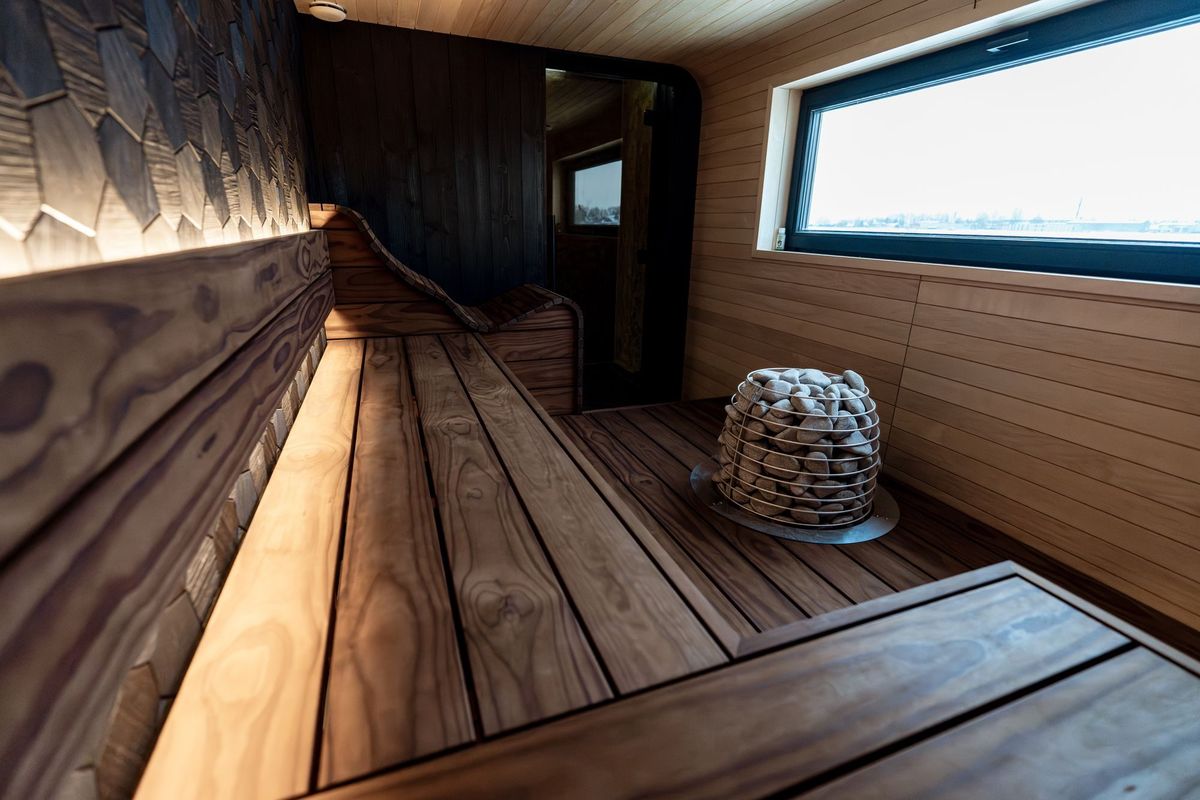
Modification does not make wood fire-resistant. Accoya is Euroclass D, like most softwoods.3 With fire-retardant treatment, ThermoWood can reach class C or B, at best B-s1,d0.2
Working with thermally modified wood: machining, gluing, finishing and fixing
Machining and storage
Thermo wood machines like a hard, brittle hardwood. Fine-toothed saw blades limit chipping, planer infeed rollers need lower pressure, and milling against the grain tears easily. The dust is fine and dry, so extraction must be effective and a respirator is required.2 Store the boards dry, flat and off the ground, and give them time to reach the moisture content of the place where they will be fitted: days indoors, weeks or months outdoors in winter.2
Gluing
Thermally modified wood takes up water slowly. With PVAc glues the water content of the glue should be kept low, and press and drying times may need to be longer. One-component PU adhesives cure with moisture, so very dry thermo wood may need its surfaces dampened. Resorcinol (RF) and EPI adhesives have also given good results.2 Our wood glue guide covers these adhesive families in depth.
Finishing
The low movement helps coatings last, but the acidity and low absorbency mean that some finishes, especially some water-based ones, adhere poorly. Sanding with P100 or brushing the surface can improve adhesion. The handbook advises against linseed oil because it can feed fungal growth, and recommends sealing cut ends.2 Our comparison of oil and lacquer finishes covers the options for untreated hardwood.
Fixings
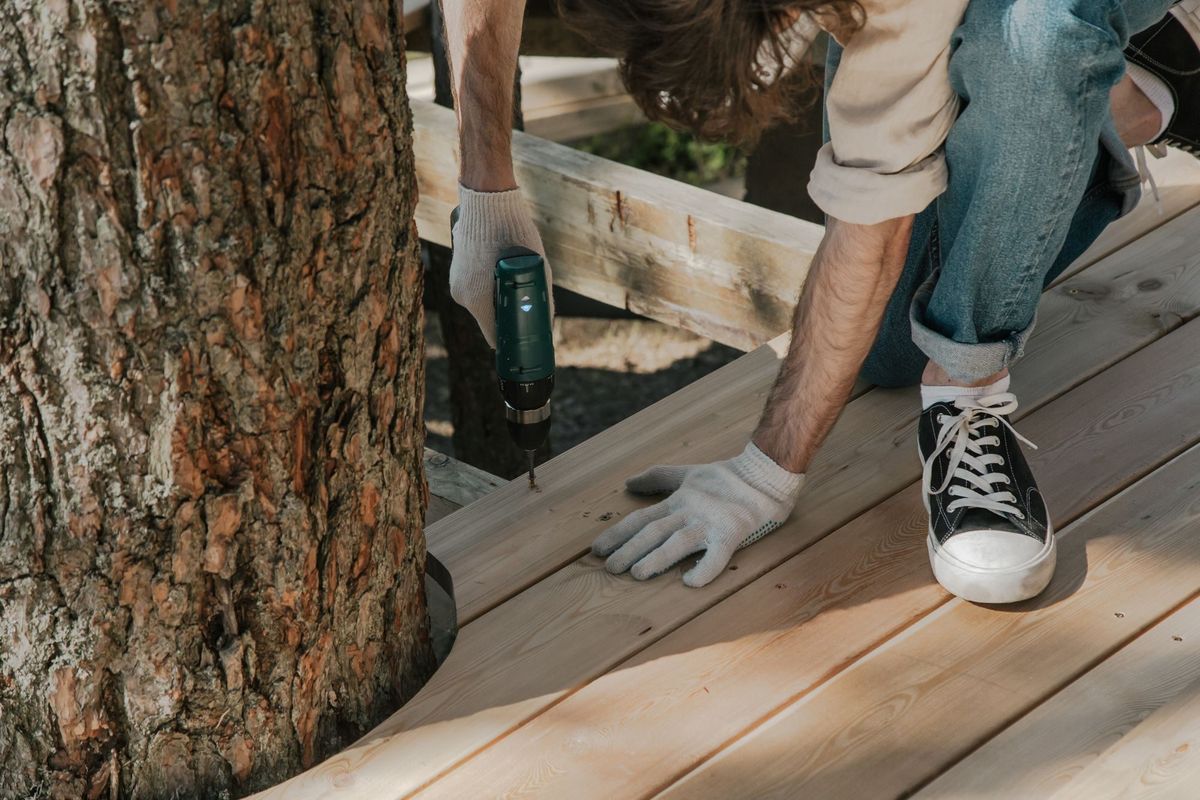
Because the wood is acidic, the ThermoWood handbook calls for acid-resistant or stainless steel fasteners. Screw holding is governed more by density than by the treatment, and in lighter material smaller pre-drilled holes gave better results.2 For acetylated wood the maker's rules are stricter, as described above.10
The market: how much modified wood is produced
A 2020 review estimated world production of thermally modified wood at 1.11 million m³ a year, of acetylated wood at 120,000 m³ and of furfurylated wood at 45,000 m³, plus around 330,000 m³ from resin-based and other processes: about 1.6 million m³ in all, by our sum.12
The members of the International ThermoWood Association publish their output every year. It grew from 18,799 m³ in 2001 to 312,267 m³ in 2025, 9.5% more than in 2024. In 2025, 74% went to EU countries other than Finland, 94% was made in class Thermo-D, and pine and spruce made up 84% of the raw material. Other species, among them ash, ayous and frake, made up 47,465 m³; ash was a quarter of that group.13
Show the data
| Year | ThermoWood production |
|---|---|
| 2001 | 18,799 m³ |
| 2002 | 24,605 m³ |
| 2003 | 25,797 m³ |
| 2004 | 34,968 m³ |
| 2005 | 41,607 m³ |
| 2006 | 63,919 m³ |
| 2007 | 83,791 m³ |
| 2008 | 84,273 m³ |
| 2009 | 87,308 m³ |
| 2010 | 93,734 m³ |
| 2011 | 115,394 m³ |
| 2012 | 119,570 m³ |
| 2013 | 132,008 m³ |
| 2014 | 147,662 m³ |
| 2015 | 159,333 m³ |
| 2016 | 179,507 m³ |
| 2017 | 193,728 m³ |
| 2018 | 209,111 m³ |
| 2019 | 220,186 m³ |
| 2020 | 236,935 m³ |
| 2021 | 249,642 m³ |
| 2022 | 246,335 m³ |
| 2023 | 230,378 m³ |
| 2024 | 285,305 m³ |
| 2025 | 312,267 m³ |
Members' production only; other thermal processes are not included. Cumulative 2001–2025: 3,596,161 m³. Source: International ThermoWood Association, ThermoWood production statistics 2025.
We found no reliable public price series for thermally modified hardwood, so this article does not quote prices. As a rule, the price is set by the raw timber, the energy-intensive treatment, the mass and dimension loss in the kiln and the grade. Ask for quotes per m³ of finished, planed product, not of raw timber.
How we approach outdoor and modified wood at SARAL
Specifying thermally modified timber: what to ask your supplier
- Process and class. Which process (ThermoWood, another thermal process, acetylation, furfurylation), and for thermal modification, which class and peak temperature: Thermo-S or Thermo-D, 185, 190 or 212 °C.
- Species and origin. Ash, beech, pine or spruce behave differently; ask for the species on the delivery documents.
- Durability class and its basis. The EN 350 class, and whether it comes from laboratory tests (CEN/TS 15083) or field tests, for which use class (EN 335).
- Mechanical data. Bending strength, impact strength and hardness compared with untreated wood. Thermo wood is not strength-graded unless the supplier says otherwise and can document it.
- Moisture content on delivery, typically 4–7% for ThermoWood, and the dimensional tolerances after treatment.
- Fire classification for the actual product and finish, if the project has fire requirements.
- Fixings, glue and finish that the producer has tested with the product.
- Quality control. Whether the production is audited by a third party; ThermoWood producers are audited at least once a year.2
Frequently asked questions
What are the disadvantages of thermally modified wood?
It is more brittle than untreated wood: bending strength falls, and impact and splitting strength drop by roughly a quarter to two-fifths. It is not for load-bearing structures or ground contact, it greys in sunlight without a finish, its acidity calls for stainless fixings, and some coatings adhere less well.1,2
Is thermally modified ash good for decking?
Thermo-D ash is rated durability class 2 and suits use class 3, outdoors above ground, which includes decking. Use boards at least 26 mm thick, keep them off the ground with ventilation underneath, and use stainless steel screws.2
Should you oil thermally modified wood?
Outdoors, a finish is recommended to protect against UV, moisture and erosion and to keep the brown colour; without one the wood turns silver-grey. Avoid linseed oil, which can feed mould, and seal the end grain.2
How long does thermally modified wood last?
That depends on the class and the use. Thermo-D products carry durability class 2, meaning durable, for use above ground.2 Acetylated Accoya carries a manufacturer's warranty of 50 years above ground and 25 years in ground contact.10 For thermal products, ask the supplier what service life or warranty applies to your use class.
Is thermally modified wood the same as heat-treated pallet wood?
No. ISPM 15 heat treatment for wooden packaging only requires the core of the wood to reach 56 °C for 30 minutes, to kill pests. Thermal modification runs at 160–230 °C and changes the wood's chemistry.1,14