European ash at a glance
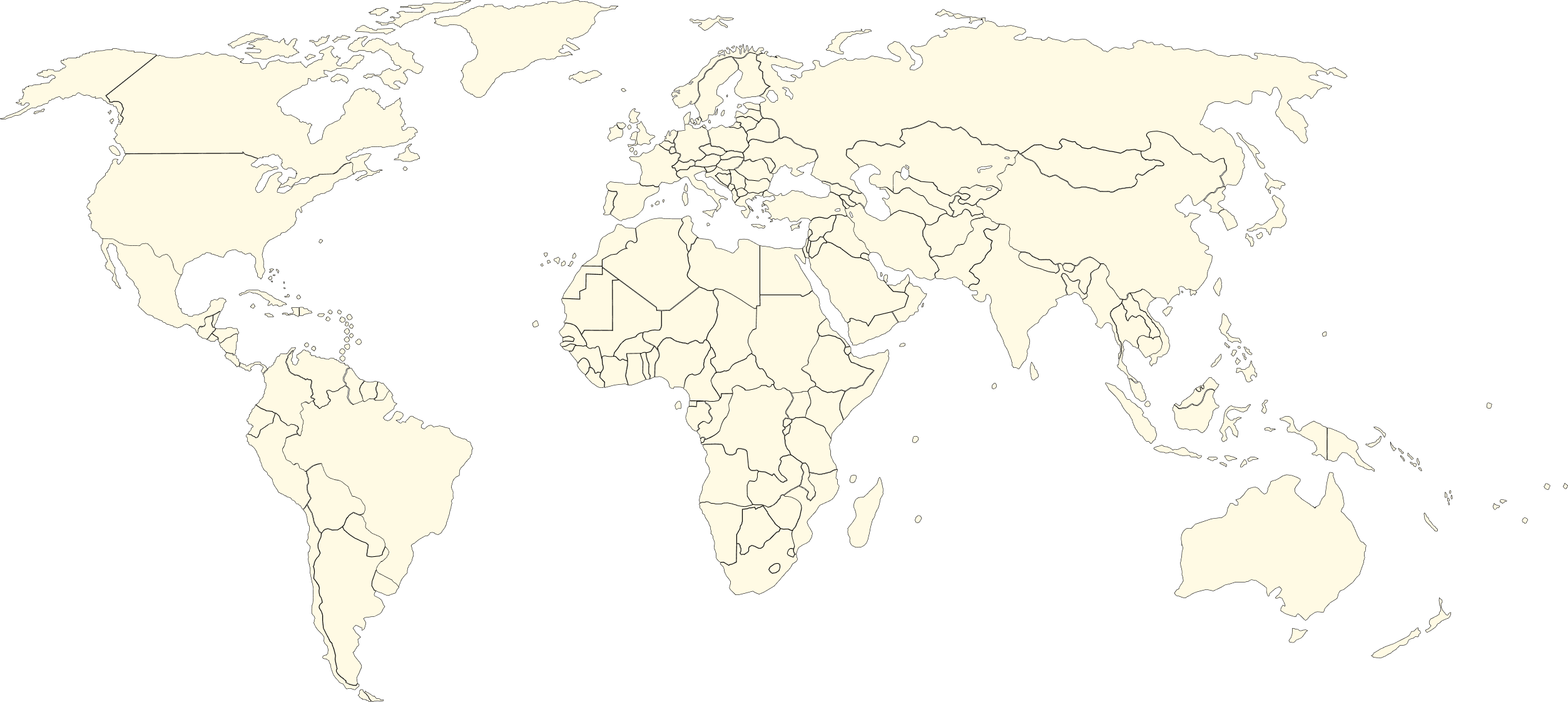
European ash, Fraxinus excelsior (frasin in Romanian, Esche in German), is a light-coloured hardwood with a straight, regular grain and a medium to coarse texture. The heartwood is light to medium brown, and the grain pattern resembles oak.1 It grows across Europe, usually mixed with other broadleaves. In Romania's National Forest Inventory, ash is not even listed separately: it sits in the group of "other hard broadleaves" with hornbeam, maples and others, which together cover 16.4% of the forest area.11
For woodworkers ash has an unusual combination of properties. It is about as heavy as oak, as hard as beech, tougher than both, and easy to work, glue, stain and finish.1 Its weak points are durability outdoors and, increasingly, supply.
Why ash is the wood for tough jobs
The Wood Database describes European ash as having fairly good strength for its weight and as shock resistant.1 Holz vom Fach lists the classic uses that follow from that: dynamically loaded parts such as sports equipment, tool handles, ladders, oars and drumsticks, plus flooring, stairs and furniture.4 When a part is hit, flexed and hit again, ash is the traditional answer.
Property data against oak and beech
Set against the two species it competes with, ash sits in the middle on most numbers and leads on hardness. Its Janka hardness of 6,580 N is the highest of the three; its bending strength (104 MPa) and stiffness (12.3 GPa) fall between oak and beech.1,2,3 It also shrinks less than beech: 9.6% tangentially from green to oven-dry, against 11.7% for beech and 8.4% for oak.
| Property | Ash (F. excelsior) | Oak (Q. robur) | Beech (F. sylvatica) |
|---|---|---|---|
| Density (kg/m³) | 680 | 675 | 710 |
| Janka hardness (N) | 6,580 | 4,980 | 6,460 |
| Bending strength, MOR (MPa) | 103.6 | 97.1 | 110.1 |
| Stiffness, MOE (GPa) | 12.3 | 10.6 | 14.3 |
| Crushing strength (MPa) | 51.0 | 46.3 | 57.0 |
| Tangential shrinkage, green to oven-dry (%) | 9.6 | 8.4 | 11.7 |
| T/R shrinkage ratio | 1.7 | 1.8 | 2.0 |
| EN 350 durability class | 5 | 2 (–4) | 5 |
Source: Meier, The Wood Database (European Ash, English Oak, European Beech); EN 350 classes from Holz vom Fach.
German data give a sense of the spread. Holz vom Fach puts the air-dry density of ash at 0.45–0.86 g/cm³, with a mean of 0.69, its Brinell hardness across the grain at 28–40 N/mm² and its bending strength at 49–178 N/mm², with a mean of 102.4 Two ash boards can behave very differently, so for demanding parts select straight-grained stock and check the density. A side-by-side comparison of all the main species is in our article on oak vs beech vs ash.
Steam bending and chair making with ash
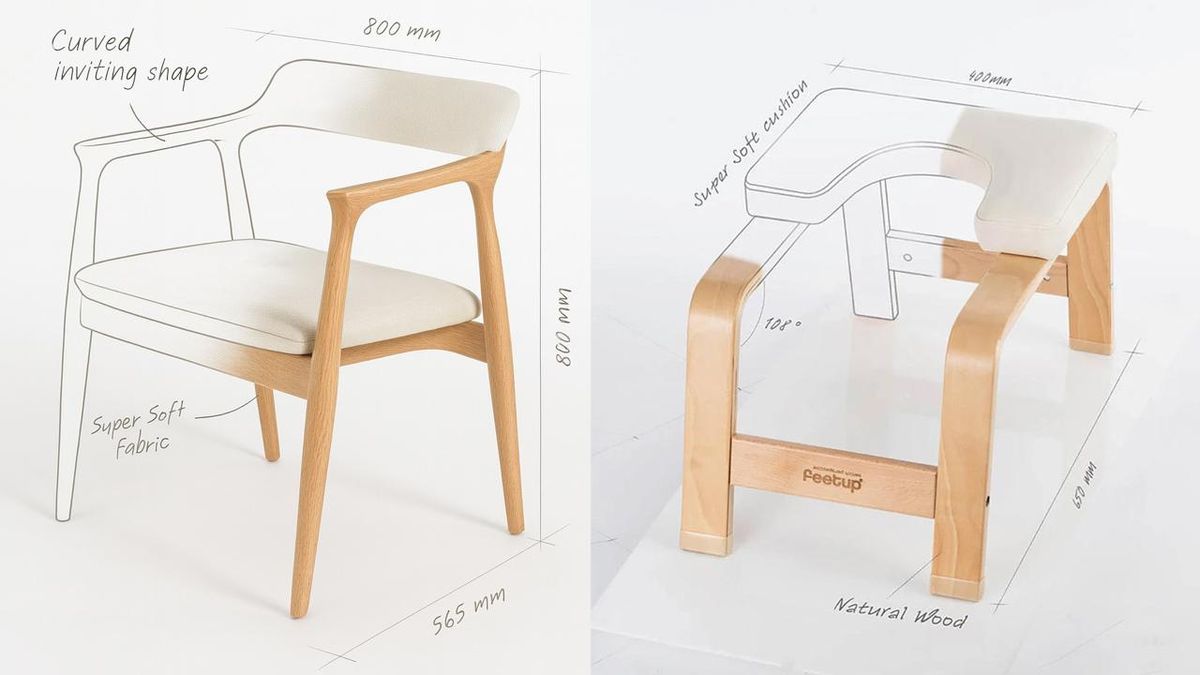
Ash responds well to steam bending, according to the Wood Database, and Holz vom Fach confirms that it bends, slices, peels, turns and glues well.1,4 Together with its toughness, that makes it a natural chair wood: bent back rails, hoops and spindles, and legs that will be knocked by feet and floors for decades.
Beech is the other classic. It is stiffer and bends even more readily, which is why the steam-bent bentwood chair, Thonet's No. 14 of 1859, was made of beech.3,12 In practice the two species are often interchangeable in chair parts, and the choice comes down to grain and colour: calm and even in beech, open and lively in ash. Our article on how solid wood chairs are made follows a chair from the blank to the finished frame.
Colour grades: white ash, brown heart and olive ash
Ash timber is sorted by colour as much as by knots. Three types matter in the trade:
- White ash is the pale, even timber without a coloured core, the look most furniture buyers have in mind.
- Brown heart (German Braunkern) is a grey-brown to olive, often cloudy core that forms in many ash trees. It is common, and it usually lowers the value of the log.4
- Olive ash (Olivesche) is a rare striped, olive-brown heart that resembles olive wood. It currently commands a high price.1,4
Holz vom Fach notes that the trend is turning as lively, colourful woods come back into fashion, so brown heart is not always a defect.4 For a buyer, the practical point is to agree in advance whether brown heart is allowed. It affects the yield from each log, and with it the price.
Ash or oak? Telling them apart and when to substitute
Ash and oak are easy to confuse once they are stained. Both have a coarse texture.1 The reliable difference is the rays. Oak has broad rays that show as silver flecks on quarter-sawn faces and as visible lines on the end grain; ash lacks those wide visible rays.1,2
Ash is a good substitute for oak indoors: harder, about as heavy and, according to the Wood Database, similar in price.1,2 It is not a substitute outdoors, where oak heartwood is EN 350 class 2 (–4) and ash class 5.4,13 And ash does not contain oak's tannins, so it does not turn blue-black when wet wood meets iron, which is a recurring problem with oak.13
Finishing and staining ash
Ash glues, stains and finishes well.1 Its coarse texture takes stain readily, which is what lets it imitate oak. For a light, natural look, choose a finish that yellows little, since the appeal of white ash is its pale colour.
Outdoors: untreated ash versus thermo-ash
Untreated ash is EN 350 class 5, not durable, and Holz vom Fach recommends it mainly for interiors.4,14 Thermal modification changes that. Heat-treated ash, sold as thermo-ash, gains enough natural durability and dimensional stability, according to Holz vom Fach, to make outdoor use possible.4 Treat it as a different material from ordinary ash: ask the producer for its durability classification and its mechanical properties, which change with the treatment.
Ash dieback: three decades of Hymenoscyphus fraxineus
Ash dieback is caused by a fungus, Hymenoscyphus fraxineus, that spreads mainly by airborne spores. Dieback was observed in Central Europe at the beginning of the 1990s; the cause was identified in 2006, and in 2008 the disease reached north-eastern France.15 A 2019 meta-analysis describes it as present in Europe for over 20 years, with widespread damage and mortality.5 In Romania, EPPO records the disease since 2005.16
Mortality figures: what the surveys show
The most careful synthesis is Coker et al. (2019), who analysed 58 European surveys. In plantations established before the disease arrived, the highest recorded mortality was about 85% (12 surveys). In woodland exposed for 4 to 20 years it was about 70% (36 surveys), a figure that may miss some dead trees. In naturally regenerated saplings it was about 82% (10 surveys).5
These are maxima, not averages, and mortality varies widely between sites. The authors also see hope: if part of the survival is due to heritable resistance, natural selection or breeding could allow ash populations to recover.5
What dieback means for timber supply and price
In the short term a tree disease can mean more ash timber on the market, not less, because owners fell infected trees early. British guidance says the economic value and condition of infected young stands "will decline rapidly", and advises considering felling older timber trees once more than half of the crown is infected; where honey fungus follows, it can make the timber unusable.17 The long-term effect is scarcity.
A French model gives the scale. Against a scenario without the disease, the standing volume of ash in France falls by 42% by 2030 and 78% by 2060. Ash roundwood supply falls by 2.1–3.6% in 2030 and 9.1–15.3% in 2060, while roundwood prices rise by 13.3–14.8% by 2030 and by more than 95% by 2060, and ash sawnwood prices by 18.1–22.1% by 2060.15 These are projections, not observed prices, but the direction is clear.
| Indicator | 2030 | 2060 |
|---|---|---|
| Standing volume of ash | −42% | −78% |
| Ash roundwood supply | −2.1 to −3.6% | −9.1 to −15.3% |
| Ash roundwood price | +13.3 to +14.8% | more than +95% |
| Ash sawnwood price | – | +18.1 to +22.1% |
Source: INRAE, QUEDAD project summary (Stenger, Marçais, Petucco, Lobianco), French Forest Sector Model. Projections, not observed prices.
The wider costs are larger still. A study of Great Britain estimated the total cost of ash dieback at £14.8 billion over 100 years, more than half of it (£7.6 billion) within the first ten years, with lost ecosystem services the largest single part.18
Emerald ash borer reaches the EU: Hungary and Slovakia, 2026
The emerald ash borer, Agrilus planipennis, is a metallic green beetle from Asia whose larvae feed under the bark of ash and kill the tree. It has caused devastating losses in North America, European Russia and Ukraine.19 In the EPPO region it was first reported in European Russia in 2007, in Ukraine in 2019 and in Belarus in 2025.7
Hungary: the first find in the EU
On 9 June 2026 one adult beetle was found in a trap in a forest at Beregsurány, in north-eastern Hungary near the Ukrainian border. A PCR test by the national reference laboratory confirmed it, and EPPO recorded it as the first report of the pest in the European Union.6 On 24 June a second adult was caught in the same trap, and bark gouges left by woodpeckers searching for larvae on nearby trunks suggested that more than one tree was infested.19 By August, surveys had found further adults and larvae at Beregsurány and seven adults in the neighbouring county of Borsod-Abaúj-Zemplén, with symptomatic ash showing bark splits and D-shaped exit holes. Hungary's official status is now "transient, actionable, under eradication".20
Slovakia: a larger, older infestation
On 13 July 2026 Slovakia notified the European Commission that 18 adults had been found in a pheromone trap on an ash tree in Trebišov district, Košice region, close to the borders with Ukraine and Hungary.7 The EU reference laboratory confirmed the identification on 20 July. By 7 August, 2,297 sites had been surveyed and 115 sites in the Trebišov and Michalovce districts were considered infested, giving an infested area of 62,208 ha.8
What the EU rules require
Under Commission Implementing Regulation (EU) 2024/434, a find triggers a demarcated area: an infested zone and a buffer zone at least 10 km wide around it.21 Slovakia has set up that 10 km buffer, and under Regulation (EU) 2019/2072 the movement of ash plants and plant products from within 100 km of the outer boundary of the infested area is prohibited.8
| Date | Where | What was reported |
|---|---|---|
| 2007 | Russia (European part) | First record in the EPPO region |
| 2019 | Ukraine | First record |
| 2025 | Belarus | First record |
| 9 Jun 2026 | Hungary, Beregsurány | One adult in a trap near the Ukrainian border, confirmed by PCR: first record in the EU |
| 24 Jun 2026 | Hungary, same trap | A second adult; woodpecker damage on nearby ash suggests more than one infested tree |
| 13 Jul 2026 | Slovakia, Trebišov district | 18 adults in a pheromone trap, notified to the Commission |
| 7 Aug 2026 | Slovakia, Trebišov and Michalovce | 115 infested sites, 62,208 ha infested area; 10 km buffer zone |
| Aug 2026 | Hungary, Borsod-Abaúj-Zemplén | Seven adults trapped and symptomatic ash; larvae at Beregsurány; status: under eradication |
| 22 Oct 2026 | Romania | No record in the EPPO Global Database |
Source: EPPO Reporting Service 2026/137, 2026/184 and 2026/185; EPPO EAB Network Newsletter No. 10 and 10a (July 2026); EPPO Global Database, Agrilus planipennis distribution (updated 22 Oct 2026).
Is the emerald ash borer in Romania?
As of 23 October 2026, we found no official report of the emerald ash borer in Romania. The EPPO Global Database, whose distribution page for the beetle was last updated on 22 October 2026, lists Hungary and Slovakia as "transient" and Ukraine as "present, restricted distribution", and has no entry for Romania. None of the EPPO reports on the Hungarian and Slovak finds mentions Romania.6,8,9,20 We also found no announcement of a find by the Romanian authorities.
Romania is nonetheless affected. The first Hungarian find is in the Bereg area, close to where the Hungarian, Ukrainian and Romanian borders meet, and Ukraine has had the beetle since 2019. A 2026 notice from Ireland's Department of Agriculture told ash importers that, because of the Hungarian and Slovak findings, the movement of ash wood from areas of Hungary and Slovakia, "and also parts of Romania, Poland and Ukraine", is now restricted under EU legislation.10 That is consistent with the 100 km rule. In short: no confirmed find in Romania, but parts of the country lie inside restriction zones, and the beetle's arrival is a matter of surveillance, not speculation. Check the EPPO database and the Romanian plant-health authority before you move or import ash from the north-west of the country.
How we work with ash at SARAL
Sourcing ash responsibly today: a buyer's checklist
- Specify the colour grade. White ash only, brown heart allowed, or olive ash. Write it into the order.
- Ask where the logs come from. With EU restrictions on moving ash out of zones around infested areas, origin matters for compliance as well as quality.8
- Check the plant-health rules for your product. Requirements can differ between logs, wood with bark and sawn timber, and demarcated areas change as surveys progress.
- Look for signs. D-shaped exit holes and bark splitting on ash logs are typical signs of emerald ash borer; report suspicions to the plant-health authority.20
- Build in alternatives. Design parts so they can also be made in beech or oak if ash becomes scarce or expensive.
- For outdoor use, specify thermo-ash with its durability classification, not untreated ash.4
Frequently asked questions
Is ash wood good for furniture?
Yes. European ash is as hard as beech (Janka 6,580 N), harder than oak, tough, easy to work and finish, and it bends well with steam, which makes it a classic wood for chairs, tables, stairs and flooring indoors.1,4
Can ash dieback timber be used?
Often yes, if the tree is felled before decay sets in. British guidance warns that the value of infected stands declines quickly and that honey fungus following the disease can make timber unusable, so infected timber trees are best felled early.17 When you buy ash, ask how long the trees stood dying before they were felled.
Has the emerald ash borer reached Europe?
Yes. It has been in European Russia since 2007, Ukraine since 2019 and Belarus since 2025. In 2026 it was found for the first time in the EU, in Hungary (9 June) and Slovakia (notified 13 July).6,7
What is thermo-ash?
Ash that has been heat-treated to change its chemistry. The treatment improves its natural durability and dimensional stability enough for outdoor use, where untreated ash (EN 350 class 5) would rot.4