Why responsible sourcing matters to hardwood buyers
"Where does this wood come from?" used to be a question from a few customers. Now regulators, public tenders and retailers ask it too. Three things changed at once. The EU Deforestation Regulation (EUDR) makes legal, deforestation-free origin a condition for selling wood in the EU. EU consumer law has tightened what a seller may say about the environment. And the two big certification schemes, FSC and PEFC, have become the language buyers use to write sourcing requirements into contracts.
This guide explains what the schemes certify, what the claims on an invoice mean, how to check a certificate yourself, and where certification stops and the law begins. It reflects the standards and legal texts as of October 2026. It is a practical summary, not legal advice.
FSC and PEFC: two systems, two ways of governing
Both schemes certify two things: how a forest is managed (forest management, or FM, certification) and how the wood is tracked after it leaves the forest (chain of custody, or CoC, certification). Both rely on independent certification bodies that audit on site. They differ mainly in how their standards are written.
FSC: one international standard, adapted nationally
The Forest Stewardship Council was founded in 1993. Its forest standard, the FSC Principles and Criteria, sets ten principles, from compliance with laws and workers' rights to high conservation values. National standards turn them into local indicators.12 FSC is run by its members, in an environmental, a social and an economic chamber with a third of the vote each, split equally between the global North and South.13 Certification bodies are accredited by Assurance Services International (ASI), which also investigates fraud.14
PEFC: an alliance of national systems
PEFC, the Programme for the Endorsement of Forest Certification, was created in 1999 by small and family forest owners in Europe. It does not write one forest standard. It endorses national systems, developed by national stakeholders, after an independent assessment against its international benchmarks.15 It has 57 national members and 48 endorsed systems covering 52 countries.3 A PEFC certificate is valid for up to five years, with a surveillance audit every year.16
How forest management certification works
The forest owner applies to a certification body, which audits the management plan, the records and the forest against the national standard. In PEFC's description, every nonconformity must be resolved before a certificate is granted.16 The certificate covers a defined forest area. What happens to the wood after it leaves that area is the job of chain of custody certification.
Show the data
| FSC | PEFC | |
|---|---|---|
| Europe | 70.0 million ha | 81.5 million ha |
| North America | 58.1 million ha | 161.1 million ha |
| Latin America | 20.9 million ha | 12.5 million ha |
| Asia-Pacific | 13.6 million ha | 35.4 million ha |
| Africa | 11.1 million ha | 4.9 million ha |
PEFC 'Asia-Pacific' is our sum of its Asia (17.6) and Oceania (17.8) regions; PEFC 'Latin America' is its Central and South America region. About 63 million ha were certified by both schemes in mid-2024, so the bars overlap. FSC's regional values add up to slightly more than its headline total of 173.3 million ha. Source: FSC, Facts & Figures dashboard, regional distribution, 24 October 2026; PEFC, Global Statistics, March 2026.
What the difference means for a buyer
- Availability depends on the country. Romania has about 2.92 million ha of FSC forest against 0.66 million ha under PEFC. Germany is the reverse: 1.29 million ha FSC, 8.47 million ha PEFC.1,2 Insisting on one scheme can narrow your supply.
- Your customer decides. Retailers and public tenders often name FSC, PEFC or both. Copy their wording, including which claims they accept.
- Labels do not mix on the product. A product sold with an FSC claim may not carry another forest certification label, although the invoice may show both an FSC and a PEFC claim.4
| FSC forest area | PEFC forest area | FSC CoC certificates | PEFC CoC certificates | |
|---|---|---|---|---|
| Romania | 2.92 million ha | 0.66 million ha | 842 | 58 |
| Germany | 1.29 million ha | 8.47 million ha | 2,048 | 1,736 |
| Europe | 69.96 million ha | 81.51 million ha | 23,603 | 11,192 |
| World | 173.27 million ha | 295.36 million ha | 70,300 | 13,955 |
A forest or a company can hold both certificates, so the columns cannot be added. PEFC counts certificates; one multi-site certificate can cover many companies, and PEFC reports more than 29,800 certified companies worldwide. Source: FSC, Facts & Figures dashboard, accessed 24 October 2026; PEFC, Global Statistics, March 2026.
What the claims on an invoice mean
A certified product is identified by a claim on the invoice or delivery note, next to the seller's certificate code. Without the claim on the document, the goods are not certified for you, whatever the website says.4,5
| Claim | What it means | Label on the product? |
|---|---|---|
| FSC 100% | All inputs from FSC-certified forests | Yes, FSC 100% |
| FSC Mix x% | x% FSC-certified and recycled inputs; the rest controlled | Yes, FSC Mix, from 70% |
| FSC Mix Credit | Volume sold matches certified inputs bought; a single piece may be controlled material | Yes, FSC Mix |
| FSC Recycled | Reclaimed material only | Yes; for wood, at least 70% post-consumer |
| FSC Controlled Wood | Not certified; checked against five categories of unacceptable sources | No; sold only raw or semi-finished to FSC-certified buyers |
| x% PEFC certified | x% certified content (certified forests and recycled material) | Yes, PEFC Certified, from 70% |
| 100% PEFC Origin | Only material from PEFC-certified forests, never mixed | Yes, PEFC Certified |
| PEFC controlled sources | Not certified; due diligence found negligible risk of controversial sources | No |
Source: FSC-STD-40-004 V3-1, tables B, C and E and clause 5.6; FSC-STD-40-005; PEFC ST 2002:2020, definitions 3.24–3.28; PEFC ST 2001:2020, clause 7.1.2.
FSC 100%, FSC Mix and FSC Recycled
FSC 100% means all inputs came from FSC-certified forests. FSC Mix covers any combination of FSC-certified, recycled and controlled material; a product made only of controlled or reclaimed material cannot be sold as FSC Mix.4 It comes in two forms:
- FSC Mix x%: the percentage is the share of FSC-certified and recycled inputs over a job order or claim period. The FSC Mix label may be used from 70%.4
- FSC Mix Credit: the company sells as FSC Mix Credit a volume matching the certified inputs it bought. A given piece may therefore contain controlled material rather than certified wood. It may still carry the FSC Mix label.4
FSC Recycled covers products made only from reclaimed material. For wood, the label needs at least 70% post-consumer content.4
FSC Controlled Wood: checked, not certified
FSC Controlled Wood comes from uncertified forests. A certified company has checked it against five categories of unacceptable sources: illegal harvesting; violation of traditional and human rights; forests whose high conservation values are threatened by management; forests being converted to plantations or non-forest use; and forests with genetically modified trees.6 It exists to make mixing possible. It may only be sold with the "FSC Controlled Wood" claim as a raw or semi-finished product to an FSC-certified customer, and it never carries an FSC label.4
PEFC: x% PEFC certified and PEFC controlled sources
PEFC has two claims. "x% PEFC certified" gives the share of certified content, which for PEFC includes material from certified forests and recycled material. Material from a certified forest that was never mixed may be sold as "100% PEFC Origin".5 The PEFC Certified label needs at least 70% certified material.17
"PEFC controlled sources" is PEFC's counterpart to FSC Controlled Wood: material that the company's due diligence system found to carry negligible risk of coming from controversial sources. PEFC's list goes further than FSC's. Besides illegal logging, conversion and genetically modified trees, it names harvesting above sustainable levels, failure to protect biodiversity and ecologically important areas, breaches of workers' and indigenous peoples' rights, and conflict timber.5
What no claim tells you
A claim describes origin and control, not quality. It says nothing about species, grade, moisture or glue class, and it is not an EUDR due diligence statement. Those still belong in your specification; our guide to choosing a hardwood components supplier shows where certificates fit in a full request for quotation.
Chain of custody: why every link must be certified
FSC's chain of custody standard puts it plainly. To be sold as FSC certified, a product needs an unbroken chain of certified organisations covering every change in legal ownership, from the certified forest to the company that sells it with an FSC claim or applies the label.4 Hauliers and agents who never own the goods do not need a certificate.4 PEFC works the same way: each delivery with a PEFC claim must carry the claim and the supplier's certificate number, and the buyer must check the supplier's certificate on the PEFC website.5
A certified forest is not enough
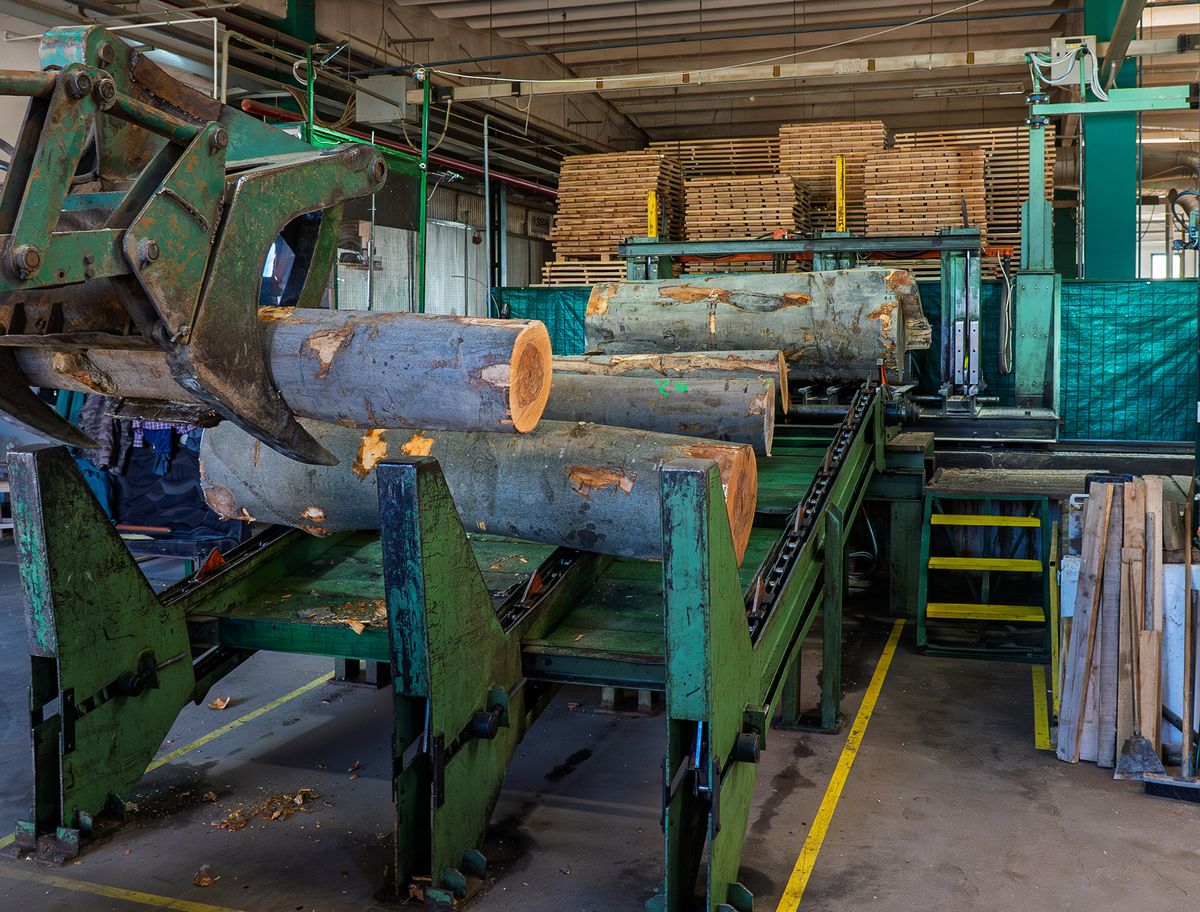
Take a simple chain. A certified forest sells logs to a sawmill that is not certified, which sells boards to a certified furniture maker. The logs left the forest with a valid claim, but the sawmill cannot pass it on. For the furniture maker the boards are uncertified input. In the FSC system they can at best enter as controlled material, if the maker verifies them under the controlled wood rules, and they can never count towards FSC 100%.4 PEFC follows the same logic. The rule for buyers: ask for the certificate of the company that invoices you, not of the forest it buys from.
What the paperwork must show
An FSC invoice must show the seller and customer, the date, the product, the quantity, the seller's FSC certificate code and the claim for each item. A seller may downgrade a claim, for example from FSC 100% to FSC Mix, but not upgrade it.4 FSC is revising its chain of custody standards; on the timeline presented in November 2025, the new versions would be published on 1 January 2027 and take effect on 1 July 2027.18
How to verify a certificate in two minutes
Certificates are public. A logo on a website is not evidence, and a PDF from the seller may be out of date. Check the database.
FSC: the FSC Search and its code formats
FSC's database is the FSC Search at search.fsc.org, still marked beta, with an official launch planned for later in 2026. The older dashboard stays online meanwhile.7 The chain of custody standard still names it info.fsc.org.4 Two codes identify a certificate holder:
- The certificate code: the certification body's prefix, the certificate type and a number, for example XXX-COC-000000 for chain of custody, XXX-FM/COC-000000 for forest management with chain of custody or XXX-CW/FM-000000 for controlled wood forest management. This code belongs on invoices.4,7
- The licence code, in the form FSC-C000000, which appears next to the FSC label on products.
Then read the status. Only "valid" allows sales with FSC claims. A suspended company may not sell or ship products with FSC claims while the suspension lasts, and a terminated one is out of the system.19 The record also shows the expiry date, the sites covered and, under "Products", each product category with its main claim and the species included.
PEFC: Find Certified
PEFC's public database is Find Certified.8 Search by company name or certificate number. Certification bodies issue the numbers, so formats vary; the standard only requires a unique identifier.5 Do not confuse it with the trademark licence number, PEFC/XX-XX-XX, which accompanies the PEFC logo.17
The two-minute check
- Copy the certificate code from the invoice, not from a brochure.
- Search it and check that name and address match your supplier.
- Check the status (valid) and the expiry date.
- Open the products or scope and check that your product type, ideally the species too, is covered.
- Check that the claim on the invoice is one the certificate allows.
- Save a time-stamped copy of the record with the order; the FSC Search lets you download one.
Certification and the law: EUDR from 30 December 2026
As of October 2026 the EUDR applies to wood from 30 December 2026. Micro and small operators get until 30 June 2027, except for products the old EU Timber Regulation already covered, such as sawn wood, panels, joinery and wooden furniture.9 Our EUDR guide covers roles, dates and documents in detail.
Certification is not a shortcut. The regulation allows certification schemes to be used in the risk assessment, but says they "should not, however, substitute the operator's responsibility as regards due diligence". Their information counts as complementary.10 FSC UK states that being certified does not automatically exempt companies from their EUDR duties.20 Both FSC and PEFC have said their schemes give no "green lane" through the EUDR.21
Both schemes do offer add-ons. FSC's voluntary Regulatory Module was published in a revised version on 14 August 2026.20,22 PEFC has an EUDR Due Diligence System module, and opened a consultation on a revised version on 27 July 2026.23 Still, the EUDR asks for data a standard certificate does not carry: the geolocation of the harvest plots, the species and a due diligence statement reference number.
Greenwashing: what EU consumer law now bans
Directive (EU) 2024/825 amends the Unfair Commercial Practices Directive. Member states had to transpose it by 27 March 2026 and apply it from 27 September 2026. It adds four practices that are banned in all circumstances:11
- displaying a sustainability label not based on a certification scheme or set up by public authorities;
- making a generic environmental claim without being able to show recognised excellent environmental performance relevant to it;
- making an environmental claim about the whole product when it concerns only one aspect;
- claiming a neutral, reduced or positive climate impact based on offsetting.
The directive's examples of generic claims include "environmentally friendly", "eco-friendly", "green", "ecological" and "climate friendly". A certification scheme must be open to all traders on transparent terms, developed with experts and stakeholders, able to suspend or withdraw the label, and monitored by an independent third party.11
For wood the consequences are direct. A home-made "eco wood" leaf logo is a label without a certification scheme. "From sustainably managed forests" on its own is a generic claim. A correct FSC or PEFC claim backed by a valid certificate rests on a certification scheme. The rules govern business-to-consumer communication, but they reach B2B suppliers whose wording ends up on consumer products. Romania transposed them by Emergency Ordinance 18/2026 and Germany by the third amendment to its Unfair Competition Act (UWG), both applying from 27 September 2026.24,25
The Green Claims Directive is still blocked
A more detailed law was meant to follow. The Commission proposed the Green Claims Directive in March 2023, announced on 20 June 2025 that it intended to withdraw it, and the trilogue set for 23 June 2025 was cancelled. Its 2026 work programme still lists the proposal as pending; the European Parliament's tracker showed it as blocked in the Council in September 2026.26 The procedure file still reads "awaiting Council's 1st reading position".27 Directive 2024/825 is the rule that applies today.
Romania: SUMAL, illegal logging, low risk and primeval beech
In Romania, FSC is the dominant scheme. Its certified area reached 2.92 million ha in October 2026, up from under 1 million ha in 2006.1 That equals about 41% of the 7.05 million ha of forest in the national inventory, a share we calculated from the two sources.1,28 PEFC Romania's system is endorsed by PEFC and covered 0.66 million ha in March 2026; the two areas may overlap.2,29
Show the data
| Year | FSC-certified area |
|---|---|
| 2006 | 0.94 million ha |
| 2008 | 1.08 million ha |
| 2010 | 0.91 million ha |
| 2012 | 0.72 million ha |
| 2014 | 2.55 million ha |
| 2016 | 2.52 million ha |
| 2018 | 2.73 million ha |
| 2020 | 2.81 million ha |
| 2022 | 2.89 million ha |
| 2024 | 2.85 million ha |
| 2026 | 2.92 million ha |
On 1 October 2026 the area was 2,921,115 ha. Source: FSC, Facts & Figures dashboard, country trend for Romania, accessed 24 October 2026.
SUMAL. Every transport of wood from Romanian forests travels with an electronic document issued in SUMAL 2.0, the national tracking system. In May 2026 it had more than 92,000 users and issued about 20,000 transport documents a day.30 The "Inspectorul Pădurii" app shows the transports of the last 96 hours to anyone.31 A draft for SUMAL 3.0 went to consultation in May 2026; we found no final decision as of October 2026.30
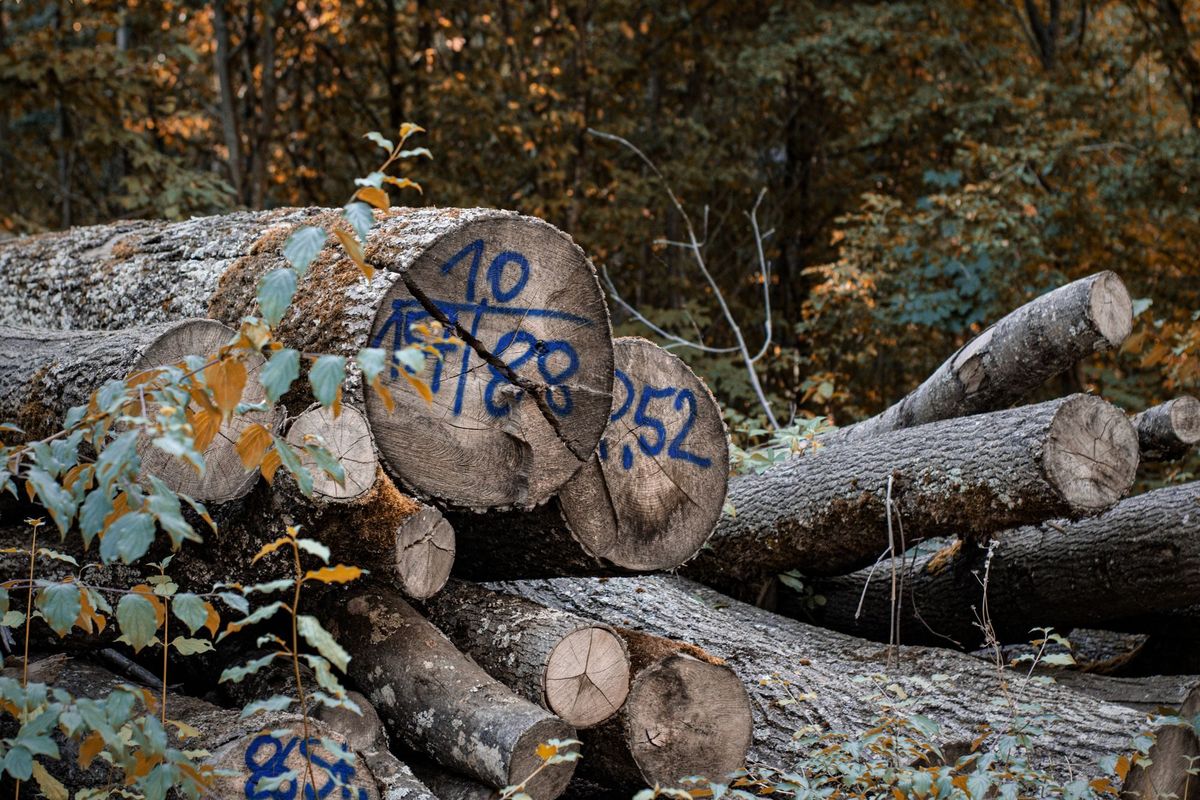
Illegal logging. In February 2020 the European Commission sent Romania a letter of formal notice, finding that authorities could not check operators effectively under the EU Timber Regulation.32 The national forest inventory estimates the harvest at about 26.6 million m³ a year; the statistics office reported 19.4 million m³ for 2025. The methods differ and neither source quantifies illegal felling.28,33 In July 2026 FSC reported that a three-year ASI investigation found no evidence of illegal logging in the FSC-certified operations it assessed, but did find weaknesses in timber reporting.34 Our article on Romania's hardwood forests explains the numbers in full.
Low risk under the EUDR. Romania, like every EU member state, is classed as low risk.35 That allows simplified due diligence, not an exemption; geolocation and a due diligence statement are still required. We found no change to the country list as of October 2026.
Primeval beech. Romania holds part of the UNESCO World Heritage site of ancient and primeval beech forests, which has 93 components in 18 countries. These forests are protected and are not a source of timber.36
Beyond the certificate: species, residues and distance
Species and provenance
Ask for the species, not just the trade name. "Oak" may mean pedunculate or sessile oak (Quercus robur, Q. petraea) or Turkey oak (Q. cerris), a different timber. The EUDR information system also asks for species-level identification. Ask for the region of origin too.
CITES for exotic species
CITES, the convention on trade in endangered species, controls some tropical timbers through export permits. In 2022 the African populations of Afzelia (doussie), Khaya (African mahogany) and Pterocarpus (padauk) were added to Appendix II, covering logs, sawn wood, veneer, plywood and transformed wood, with permits required since 23 February 2023.37 For exotic species, ask for the CITES documents as well as the certificate.
Using the whole log
In a worked example by FAO, ITTO and UNECE, 1 m³ of hardwood logs yields about 0.64 m³ of rough green lumber; about 0.14 m³ becomes sawdust and 0.22 m³ slabs, edgings and trim.38 EU energy law sets an order of priority for woody biomass: wood products first, then longer service life, re-use, recycling, bioenergy and only then disposal.39 Our article on yield optimisation shows how mills raise the share that ends up in products.
Local versus long-distance supply
Distance is not an ethical category in itself, but it changes the paperwork. Each change of ownership adds a certificate to check and a set of EUDR records to pass on. A short chain, with sawing, drying and machining in one company, is easier to document and audit than a long one with several traders.
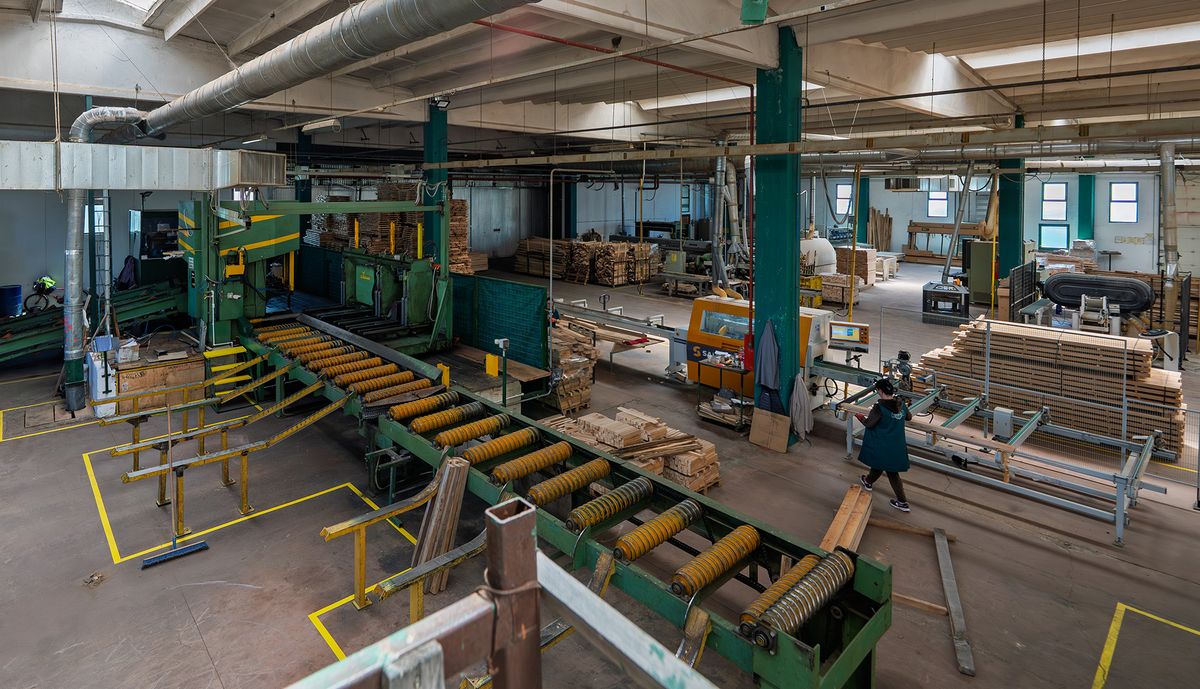
How we source wood at SARAL
Buyer checklist: what to ask your supplier
- The exact claim. Write "FSC Mix 70% or higher", "FSC 100%" or "x% PEFC certified" into the order, not "certified wood".
- The seller's own certificate code, belonging to the company that invoices you.
- A database check: status valid, expiry ahead, scope covering your product and species. Keep the record.
- The claim on every invoice line. No claim on the document, no certified product.
- Agreed wording on the product. Avoid generic phrases such as "eco wood".
- EUDR data separately: who files the due diligence statement and how you receive the reference numbers.
- Species and origin at species level, plus CITES documents for exotic timbers.
- Notice of changes: a contract clause obliging the supplier to tell you at once if its certificate is suspended or its scope changes.
Frequently asked questions
What is the difference between FSC and PEFC?
FSC sets one international forest standard, adapted nationally, and is governed by members in environmental, social and economic chambers.12,13 PEFC endorses national systems that meet its international benchmarks.15 Both certify forest management and chain of custody through independent audits. For a buyer, what matters most is which scheme is available in the supplier's country and which one the end customer asks for.
What does FSC Mix 70% mean?
At least 70% of the inputs, over a job order or claim period, were FSC-certified or recycled; the rest was controlled material or FSC Controlled Wood. 70% is the minimum for the FSC Mix label under the percentage system.4
How do I check whether an FSC or PEFC certificate is valid?
Take the code from the invoice and search it in the FSC Search or PEFC's Find Certified. Check the name, status, expiry date and whether the products and sites in scope cover what you buy.7,8
Does FSC or PEFC certification make wood EUDR compliant?
No. Certification can serve as complementary information in the risk assessment, but it does not replace the operator's due diligence, the geolocation data or the due diligence statement.10,20
Is "70% PEFC certified" wood certified?
Yes. It is a PEFC-certified product with 70% certified content and the rest from PEFC controlled sources, and it may carry the PEFC Certified label, for which 70% is the minimum.5,17