

Romania's forests at a glance
Romania is one of Europe's large forest countries, and most of its forest is broadleaved. The third cycle of the National Forest Inventory (Inventarul Forestier Național, IFN), which measured the country between 2020 and 2025, counts 7,053,916 ha of forest, meaning land covered by trees. Adding bare land and land to be afforested gives 7.20 million ha of forest land.1 On a land area of 238,397 km², that is about 30% of the country.1
For a buyer of beech or oak, the more useful numbers are what grows, how fast it grows and how much is cut. The inventory answers all three. Its numbers do not always match the annual statistics, and this article explains why rather than choosing between them.
Two official area figures: 7.05 or 6.62 million hectares?
Search for "Romania forest area" and you will find two numbers, both official.
- 7.05 million ha is the IFN figure. The inventory is a statistical survey. Aerial photographs are interpreted on close to a million points, and field teams measure sample plots laid out on a national 4 × 4 km grid. Each sampling unit is a 250 m square with a plot at every corner.6 The result describes land that is actually covered by trees, whatever its legal status.
- 6.62 million ha is the national forest fund (fondul forestier național) reported by the National Institute of Statistics, INS: 6,617,101 ha at the end of 2025, of which 6,460,628 ha, or 97.6%, is forest proper.2 The forest fund is a legal and administrative category. It changes when land is formally reclassified. In 2025, for example, it grew by 170 ha, mainly through afforested pastures and degraded land brought in under the Forest Code (Law 331/2024).2
The difference of roughly 0.4 million ha is therefore not an error. The two sources define forest differently, and the INS release itself shows tree-covered land, such as afforested pastures, being moved into the forest fund over time. Both numbers are correct for their purpose: the IFN for what grows, the INS figure for what is managed under forestry law.
Species mix: why Romania is a beech-and-oak country
About three-quarters of Romania's forest area is broadleaved. Beech alone covers more than a third, more than all conifers together.1
Beech (Fagus sylvatica)
Beech covers 2,525,177 ha, or 35.8% of the forest area. It holds 912.9 million m³ of standing timber, 37.2% of the national total, more than any other species group.1 It grows mainly in the hills and mountains of the Carpathians. For the wood industry, beech is Romania's main hardwood. It is the basis of steamed and unsteamed beech lumber, chairs, furniture parts and glued panels. Our beech wood guide covers its properties and red heart.
Oaks: stejar, gorun, cer and gârniță
The inventory reports oaks (cvercinee) as one group: 1,274,836 ha, or 18.1% of the forest area, with 332.0 million m³ standing.1 In Romania this group includes pedunculate oak (stejar, Quercus robur), sessile oak (gorun, Q. petraea), Turkey oak (cer, Q. cerris) and Hungarian oak (gârniță, Q. frainetto). The public IFN tables do not split the group by species. For furniture and joinery, the first two are what the trade calls European oak.
Ash, lime and other hardwoods
"Other hard broadleaves" (foioase tari: hornbeam, ash, maples, black locust and others) cover 16.4% of the area. "Soft broadleaves" (foioase moi: lime, poplars, willows, alder, birch) cover 4.5%.1 The inventory does not report ash or lime separately in its public tables, so we cannot give reliable national figures for them.
Standing stock and growth
Romania's forests hold 2.45 billion m³ of standing timber, an average of 347.6 m³ per hectare.1 In the previous inventory cycle (2013–2018) the average was 339.8 m³ per hectare, on 6.93 million ha.3 The stock per hectare has therefore grown between the two cycles.
Annual growth (current annual increment) is 59.96 million m³, or 8.5 m³ per hectare per year. Beech adds 21.9 million m³ a year, conifers 20.5 million, oaks 8.0 million and other hard broadleaves 6.8 million.1 Oak grows more slowly per hectare than beech, at about 6.3 against 8.7 m³ per hectare per year.1 That is part of the reason good oak logs are scarcer than beech.
How much is harvested: the IFN and INS numbers explained
Here the two official sources diverge most, and the gap is often quoted without its context.
What the inventory measures
The IFN remeasures its sample plots and records the trees that have been cut since the previous visit. When the cycle II results were presented in 2019, the harvest estimate covered selective felling, clear-felling and trees missing from the plot whose stump could not be found.6 Scaled up to the whole country, cycle III gives 28.25 million m³ a year felled and 26.58 million m³ a year harvested (removed from the forest).1 Set against growth, that is about 44%. By species group the harvest is 39% of growth for beech, 44% for oaks and 47% for conifers.1
Show the data
| Current annual increment | Harvested (removed from the forest) | |
|---|---|---|
| Conifers | 20.5 million m³ | 9.6 million m³ |
| Beech | 21.9 million m³ | 8.5 million m³ |
| Oaks | 8.0 million m³ | 3.5 million m³ |
| Other hard broadleaves | 6.8 million m³ | 3.5 million m³ |
| Soft broadleaves | 2.8 million m³ | 1.5 million m³ |
Totals: increment 59.96, harvested 26.58 million m³ per year (about 44%). Source: Inventarul Forestier Național, Rezultate IFN ciclul III (2020–2025), tables A.4.1 and A.6.2.
What the annual statistics measure
INS publishes two series. The forestry activity statistics report the timber harvested in the national forest fund: 19.41 million m³ in 2025, up 4.1% on 18.64 million m³ in 2024, after 19.17 million in 2023 and 20.24 million in 2022.2,7 A separate survey of certified harvesting companies reports 17.36 million m³ of round wood without bark in 2025. That figure includes 5.58 million m³ of beech, 32.1% of the total, and 1.96 million m³ of oak. Logs made up 46.5% of the round wood and firewood 40.7%.8
Show the data
| Harvested wood | |
|---|---|
| INS 2022 | 20.2 million m³ |
| INS 2023 | 19.2 million m³ |
| INS 2024 | 18.6 million m³ |
| INS 2025 | 19.4 million m³ |
| IFN III, yearly average | 26.6 million m³ |
INS: timber harvested in the national forest fund, as reported. IFN: removals measured on sample plots over all tree-covered land, averaged over 2020–2025. Source: INS, Activitatea din silvicultură în anul 2023 and 2025 (press releases 134/2024 and 131/2026); Inventarul Forestier Național, ciclul III, table A.6.2.
Why the numbers differ
The IFN figure is about 7 million m³ a year higher than the INS figure. The sources differ in at least five ways, and each explains part of the gap.
- Coverage. The IFN covers all 7.05 million ha of tree-covered land; INS covers the 6.62 million ha forest fund.1,2
- What is counted. The IFN measures what is physically missing from its plots, so it captures every removal, whether or not it was reported. INS counts what passes through the reporting system.2,6
- Units. The operator survey reports round wood without bark, and each source uses its own volume definition, so the figures are not like for like.8
- Period. The IFN figure is an annual average over the remeasurement period; INS figures are calendar years.
- Sampling error. The IFN is a sample, and its results come with a statistical margin of error.1
The gap is at the heart of Romania's debate about illegal logging, because part of it may be timber cut outside the reporting system. Neither official source says how large that part is, and we do not estimate it either. For comparison, the cycle II estimate, presented in 2019, was higher still at 38.7 million m³ a year.6
Who manages the forest
Romania's forest is managed through forest districts (ocoale silvice), each working to a forest management plan. State forests are run by the National Forest Administration Romsilva; other owners' forests are run by state or private forest districts under contract. Harvests start from an assessment document (act de punere în valoare, APV) drawn up by the forest district. It is the starting point of the timber's paper trail, and the public SUMAL transport map lets anyone search transports by APV.9
Regionally, the North-East development region, which includes Iași, Suceava and Neamț counties, holds 18.2% of the forest fund but supplied 28.3% of the timber harvested in 2025, the largest share of any region.2
Ancient and primeval beech forests
Romania holds part of the UNESCO World Heritage site "Ancient and Primeval Beech Forests of the Carpathians and Other Regions of Europe". The property has 93 component parts in 18 countries, covering 99,947.81 ha, with a buffer zone of 296,275.8 ha. The Romanian components were added in 2017.10 These forests are strictly protected and do not supply timber. They show what an unmanaged beech forest looks like and serve as a reference for close-to-nature forestry.
Certification: FSC in Romania
Forest certification is voluntary and comes on top of the legal requirements. The Forest Stewardship Council (FSC) reported 2.52 million ha of certified forest in Romania in June 2016, 2.68 million ha in March 2018 and 2.84 million ha in December 2019.11 We found no verified country figure for later years.
In July 2026 FSC published a FAQ on Romania. It reported that a three-year investigation by its accreditation body, ASI, "did not find evidence of illegal logging in the assessed FSC-certified operations". The investigation did find weaknesses in timber reporting systems, which were being addressed through improvements to SUMAL.12
Traceability: SUMAL 2.0 and the coming SUMAL 3.0
Timber transports from Romanian forests are recorded in SUMAL 2.0, the national timber-tracking system. As of May 2026 it had more than 92,000 users and issued about 20,000 transport documents (avize) a day.4 Through the public website and app "Inspectorul Pădurii", anyone can see the transport documents of the last 96 hours on a map and search them by number plate, document code or APV.9
In May 2026 the Ministry of Environment put out for consultation a draft decision for SUMAL 3.0. Developed by the Special Telecommunications Service, it would add AI-based risk analysis, satellite, camera and LiDAR monitoring and a link to the RO e-Transport system.4 As of October 2026 we had not found a published final decision.
For EU buyers this matters because of the EU Deforestation Regulation (EUDR), which applies to wood from 30 December 2026. Romania is classed as a low-risk country, which allows simplified due diligence, though not an exemption.5 Our EUDR guide explains what buyers of Romanian hardwood need.
The illegal-logging debate: what the official record says
Illegal logging in Romania has been widely reported in European media, and it is a serious issue. The official record is narrower than the headlines.
- European Commission, February 2020. The Commission sent Romania a letter of formal notice under the EU Timber Regulation. It found that national authorities had not been able to check operators effectively or apply suitable sanctions. It also found that inconsistencies in national law kept them from checking large amounts of illegally harvested timber. In the same decision it raised concerns about logging in protected Natura 2000 sites.13
- The harvest gap. The difference between the IFN and INS harvest figures, explained above, is the main quantitative signal. Its size depends on method, and no official source attributes a share of it to illegal felling.1,2
- FSC, July 2026. The three-year investigation found no evidence of illegal logging in the FSC-certified operations it assessed, but it did find weaknesses in reporting systems.12
- Policy response. SUMAL 2.0 since 2021, the public transport map and the planned SUMAL 3.0 are the state's main tools. EU-level traceability under the EUDR adds a further layer from December 2026.4,5,9
For a buyer, the practical conclusion is the same as for any origin: know your supplier, ask how wood is sourced, and keep the documentation.
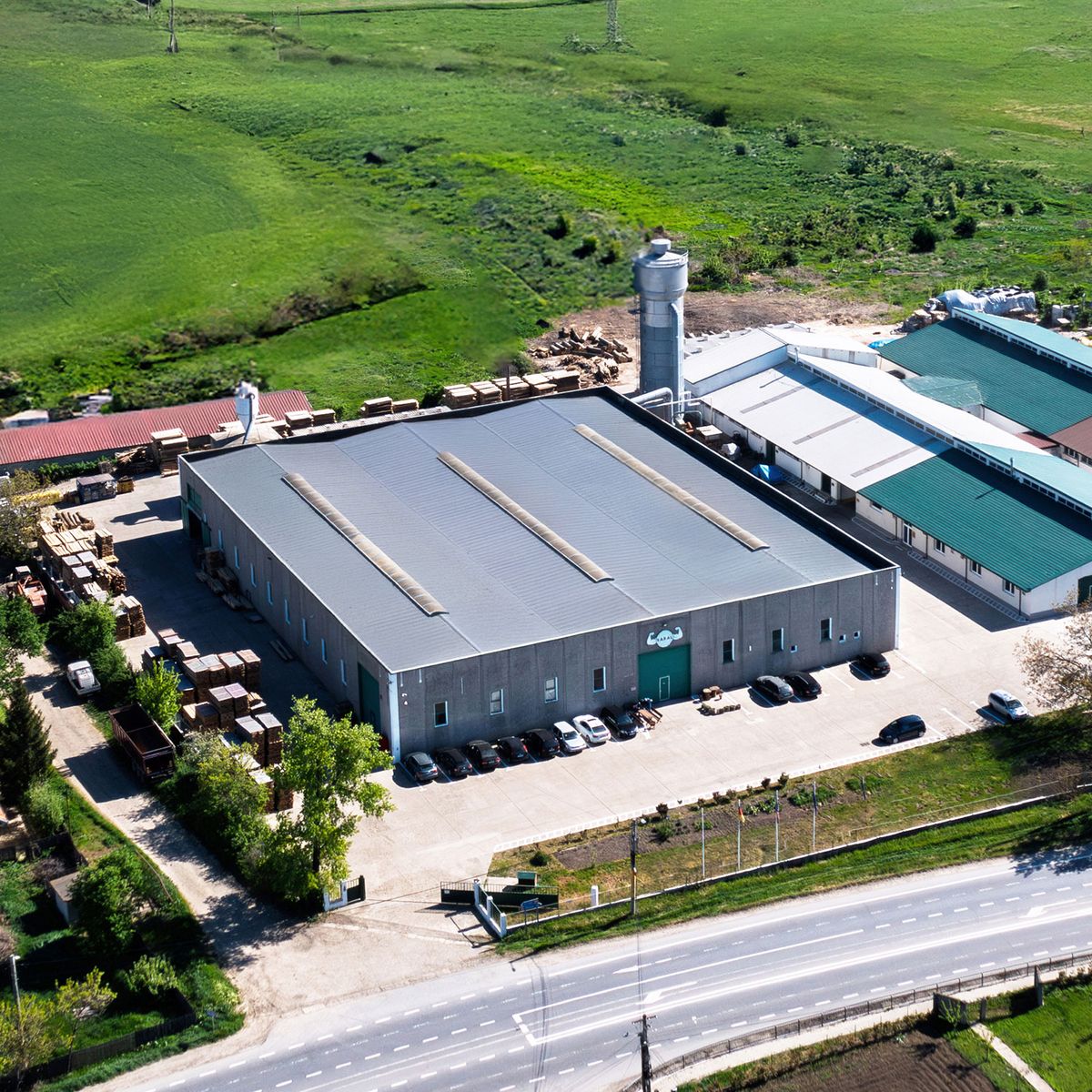
How we source in north-east Romania at SARAL
What to ask when you buy Romanian beech or oak
- Species at species level. Ask whether "oak" means Quercus robur, Q. petraea or Turkey oak (Q. cerris), which is a different timber. Ask for Fagus sylvatica for beech.
- Region of origin. Ask which county or forest district the logs come from. Under the EUDR the operator needs the plot location anyway.
- The paper trail. Ask whether the supplier can link deliveries to transport documents in SUMAL and to the harvest permit (APV).
- Certification, if you need it. If your customer requires FSC or PEFC, ask for the supplier's certificate number and check it in the public database. Do not assume it.
- Who the EUDR operator is. Ask who files the due diligence statement and how you will receive the reference numbers.
For prices and production trends, see our European hardwood market report.
Frequently asked questions
How much of Romania is forest?
About 30%. The National Forest Inventory (cycle III, 2020–2025) measures 7.05 million ha of tree-covered forest. INS reports a legally defined forest fund of 6.62 million ha.1,2
Which tree species dominate Romanian forests?
Beech, with 35.8% of the forest area, followed by conifers with 25.2%, oaks with 18.1%, other hard broadleaves with 16.4% and soft broadleaves with 4.5%.1
Is Romania cutting more wood than grows?
No, according to the inventory. Measured harvest is about 44% of annual growth, and the standing volume per hectare rose from 339.8 to 347.6 m³ between cycles II and III.1,3
Does illegal logging still happen in Romania?
The official record shows a gap between the inventory's harvest estimate and reported harvests, and a 2020 Commission finding that controls were weak. It does not quantify illegal felling. Traceability through SUMAL 2.0 and the EUDR is the main response.1,2,4,13
What is the National Forest Inventory (IFN)?
A statistical survey of Romania's forests based on sample plots on a 4 × 4 km grid, repeated in cycles. Cycle III covers 2020–2025.1,6