How an upholstered chair seat is built
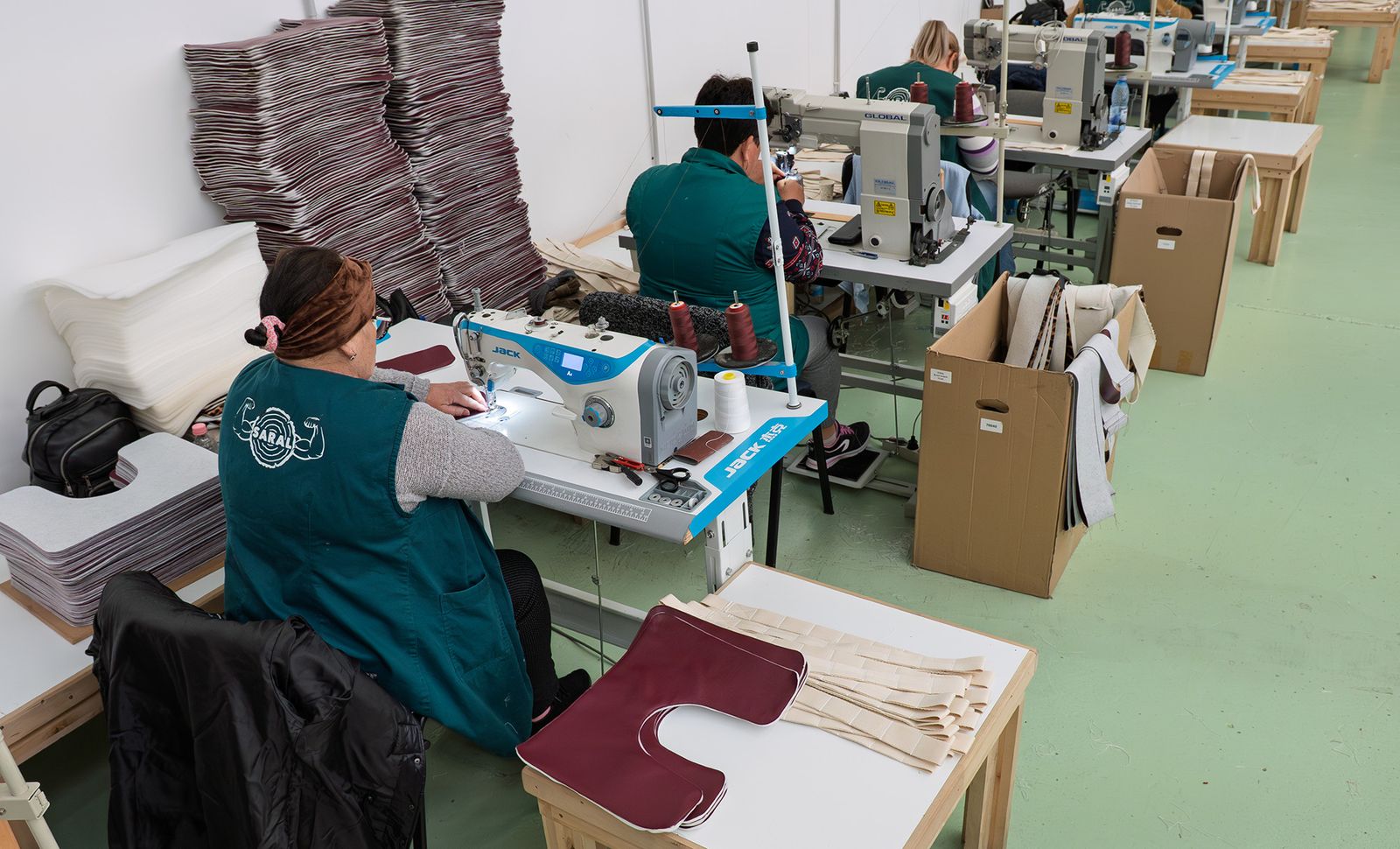
An upholstered seat on a wooden chair is a small system with four layers. A base of plywood or solid wood carries the load and is fixed to the frame. On it sits the filling, usually polyurethane foam, sometimes in two layers of different firmness. A thin wrap of wadding or fibre softens the edges and helps the cover sit smoothly. The cover, fabric, leather or coated fabric, is pulled over and stapled under the base. In fire-rated contract seating an interliner may sit between cover and filling.9
Each layer can be specified and each can fail. Foam softens, covers wear through or pill, colours fade, and the whole combination has to meet the fire rules of the place where the chair is used. The two European strength standards for chairs, EN 12520 for domestic seating and EN 16139 for non-domestic seating, test the frame. Both exclude the durability of upholstery materials, and EN 16139 also excludes flammability.8,10 The upholstery needs its own specification, and that is what this guide covers. The chair manufacturing guide covers the frame, and our guide to contract chairs for HoReCa covers seating for restaurants and hotels.
Foam: density and hardness are two different numbers
Polyurethane foam is described by two properties that buyers often confuse. Density, in kg/m³, is measured to EN ISO 845, the method for the apparent density of cellular plastics and rubbers.11 Hardness is measured either as compression stress value, in kPa, to EN ISO 3386-1, which covers low-density flexible foams up to 250 kg/m³ and was revised in 2025, or as indentation hardness, in newtons, to EN ISO 2439, which sets out four methods for indentation hardness.12,13
Density says how much material is in the foam; hardness says how firm it feels. The two are only loosely linked, as the data sheets of one German foam maker show.1
| Foam | Density, EN ISO 845 (kg/m³) | Compression hardness at 40%, EN ISO 3386 (kPa) | Indentation hardness at 40%, EN ISO 2439 (N) | Rebound resilience | Compression set, EN ISO 1856 |
|---|---|---|---|---|---|
| Softpur, PU flexible foam | 26 ± 2.6 | 4.0 ± 0.5 | 180 ± 20 | ≥ 40% | ≤ 6% |
| Isopur, PU flexible foam | 38 ± 2.6 | 4.5 ± 0.5 | 205 ± 20 | ≥ 50% | ≤ 5% |
| Megapur, rebonded PU foam | 80 ± 20 | 14 ± 5 | 180 ± 20 | – | – |
Source: Softpur GmbH (2024), technical data sheets Softpur, Isopur and Megapur, status 01.01.2024. Resilience to DIN 53512.
The lighter foam at 26 kg/m³ and the denser one at 38 kg/m³ have almost the same compression hardness, 4 kPa and 4.5 kPa. Yet the denser foam is specified with higher rebound resilience (at least 50% against at least 40%) and a lower compression set (at most 5% against 6%), which means it springs back better and loses less height under load.1 The rebonded foam, made from bonded foam chips, is far denser and firmer, and its density tolerance is much wider.1 For a seat that will be sat on daily, ask for both numbers, the test standards, and the compression set and resilience values.
Fatigue: how foam loses height and firmness
Foams soften and lose height in use. The test for this is the constant-load pounding test of ISO 3385: at the UK test house SATRA, each station presses a 250 mm radiused indentor into the foam with 750 N at 70 cycles a minute, in a controlled atmosphere of 25 °C and 50% relative humidity, and the loss of thickness and hardness is measured.14 The British specification BS 3379 grades foams for this fatigue performance in service classes from "light" to "extremely severe", and also by hardness; a foam with an indentation hardness index of 115 to 150 N, for example, is graded "130".14 For contract seats, ask which service class the foam meets.
Combustion-modified foam
In the UK, the main way to slow fire development in upholstered furniture is combustion-modified polyurethane foam, foam that meets the ignitability test of Schedule 1 Part 1 of the Furniture and Furnishings (Fire) (Safety) Regulations.9 FIRA adds a point that matters for specification: lower-density foam is generally more ignitable than higher-density foam with the same flame-retardant chemistry.9 The cheaper, lighter foam is therefore not only less durable; it can also change the fire result of the whole seat.
Fabric abrasion: the Martindale test explained
The Martindale test, EN ISO 12947, rubs a circular fabric specimen under a defined load against a standard abrasive fabric in a movement that traces a Lissajous figure, while the specimen holder rotates freely.15 Part 2 of the standard, the one quoted for upholstery fabrics, determines the number of cycles to specimen breakdown.16 A textile laboratory's test report shows how the end point is defined:2
- woven fabric without pile: two threads completely broken;
- knitted fabric without pile: one thread completely broken;
- pile and chenille fabrics: two (woven) or one (knitted) threads broken, or the area fully worn;
- non-woven fabric: a worn patch of 2.5 mm diameter in the surface layer.
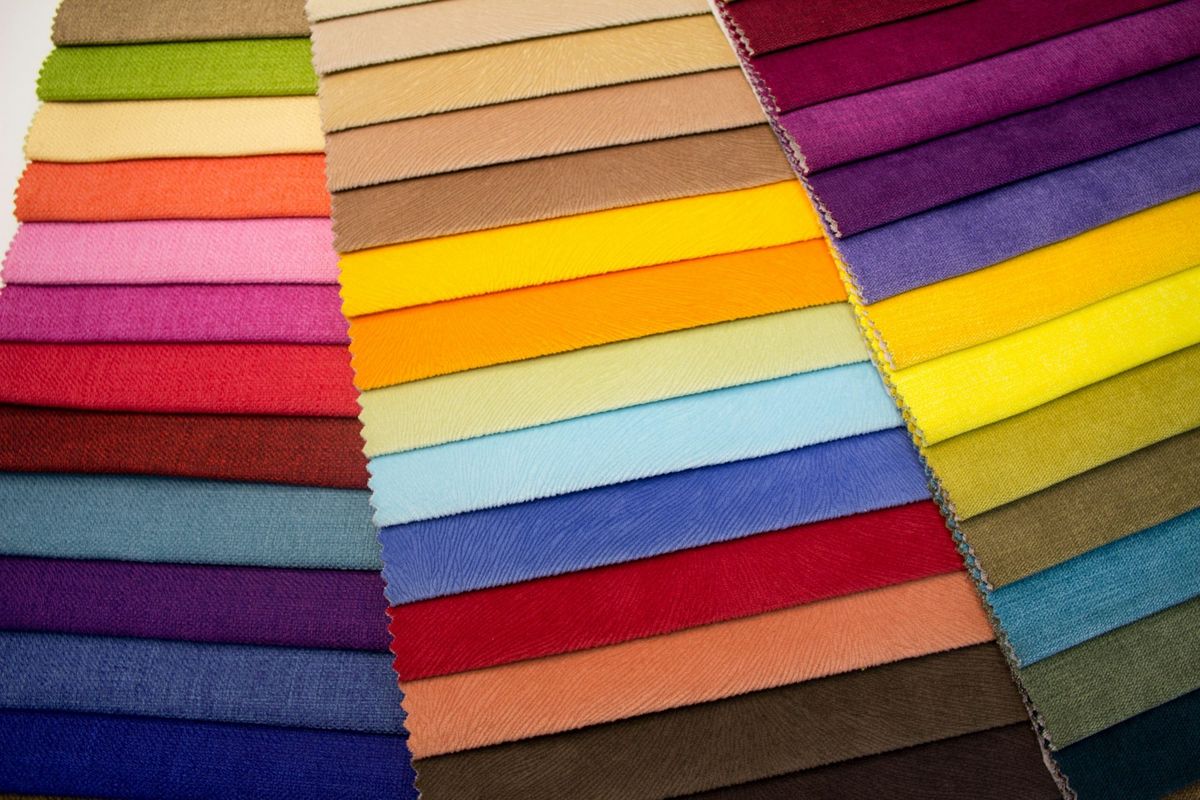
In that report the furnishing fabric was tested at a load of 12 kPa, all three specimens exceeded 40,000 cycles, and the quoted result was the lowest individual value.2 One fabric maker inspects at intervals of 5,000 rubs and usually stops testing at 100,000.17 Part 2 does not apply to coated fabrics such as PU or vinyl; their coated surface is tested with a different Martindale method, EN ISO 5470-2.16,18
How many rubs do you need?
No European standard sets a single pass mark for chair fabric. EN 14465, the specification for upholstery fabrics, defines a set of properties, their test methods and a matrix to express a fabric's performance, rather than one threshold.19 Guidance therefore comes from industry. The Association for Contract Textiles in the US gives 20,000 Martindale cycles for commercial low-traffic or private spaces and 40,000 for high-traffic public spaces, and advises against comparing absolute numbers.3 A European fabric maker uses bands of 10,000–15,000 for light duty, 15,000–30,000 for residential sofas and chairs and 30,000–50,000 or more for commercial seating and hospitality.17
| Source | Use | Martindale cycles |
|---|---|---|
| Kvadrat | Light duty: decorative cushions, occasional-use furniture | 10,000–15,000 |
| Kvadrat | Medium duty: residential sofas and chairs | 15,000–30,000 |
| Kvadrat | Heavy duty: commercial seating, hospitality, public spaces | 30,000–50,000+ |
| ACT (US) | Commercial low traffic or private spaces | 20,000 |
| ACT (US) | Commercial high traffic or public spaces | 40,000 |
Coated fabrics are tested to EN ISO 5470-2 instead; the EU Ecolabel criteria require at least 75,000 cycles for them. Source: Kvadrat (n.d.), Understanding key fabric performance indicators; Association for Contract Textiles (n.d.), abrasion performance guideline for woven and knit fabrics.
Two cautions. Results above the high-traffic guideline do not promise a longer life; the US association requires them to carry a disclaimer that they are not an indicator of lifespan.3 And a high rub count says nothing about pilling or colour, which are tested separately.
Pilling, light fastness and rub fastness
Three more tests decide whether a seat still looks good after a year in a restaurant.
- Pilling, the small balls of fibre that form on the surface, is tested with a modified Martindale method to EN ISO 12945-2 and graded from 1 (severe pilling) to 5 (no pilling).17,20
- Light fastness, resistance to fading, is tested under artificial daylight to EN ISO 105-B02 and graded from 1 to 8 on the blue wool scale, where 8 is best.4,17
- Colour fastness to rubbing, to ISO 105-X12, checks whether the dye rubs off onto clothing, dry and wet.4
The EU Ecolabel criteria for furniture give the clearest published minimums. For textile upholstery covers: pilling better than grade 3, light fastness of at least 5 (4 for some light-coloured wool and linen fabrics), dry rub fastness of at least 4 and wet rub fastness of at least 2–3. For coated fabrics: at least 75,000 Martindale cycles to EN ISO 5470-2, and light fastness of 6 indoors and 7 outdoors.4 The criteria were extended in January 2026 and are valid until 31 December 2029.5
Show the data
| Minimum grade | |
|---|---|
| Aniline, nubuck, suede leather | 3 |
| Semi-aniline leather | 4 |
| Coated or pigmented leather | 5 |
| Textile cover | 5 |
| Coated fabric, indoor | 6 |
| Coated fabric, outdoor | 7 |
Textile covers: grade 4 is allowed for some light-coloured fabrics with more than 20% wool or linen. Source: Commission Decision (EU) 2016/1332, EU Ecolabel criteria for furniture, table 8, table 9 and appendix II; validity extended to 31 December 2029 by Decision (EU) 2026/66.
Leather, fabric or coated fabric
Each cover type has its own strengths and its own tests.
- Fabric offers the widest choice of colour and texture, breathes and is easy to replace. Its weak points are stains and, for some fibres, pilling. It is tested by Martindale, pilling, light and rub fastness.
- Leather ages visibly and can be cleaned. Its performance depends on the type: in the Ecolabel criteria, which follow the leather types of EN 15987, aniline, nubuck and suede leathers need a light fastness of only 3, semi-aniline 4 and coated or pigmented leather 5, alongside tests for rub fastness, finish adhesion and flex resistance.4
- Coated fabric, often polyurethane on a textile backing, wipes clean and suits restaurants. It is tested on its coated surface to EN ISO 5470-2, with tensile strength, tear resistance and coating adhesion as further checks.4,18
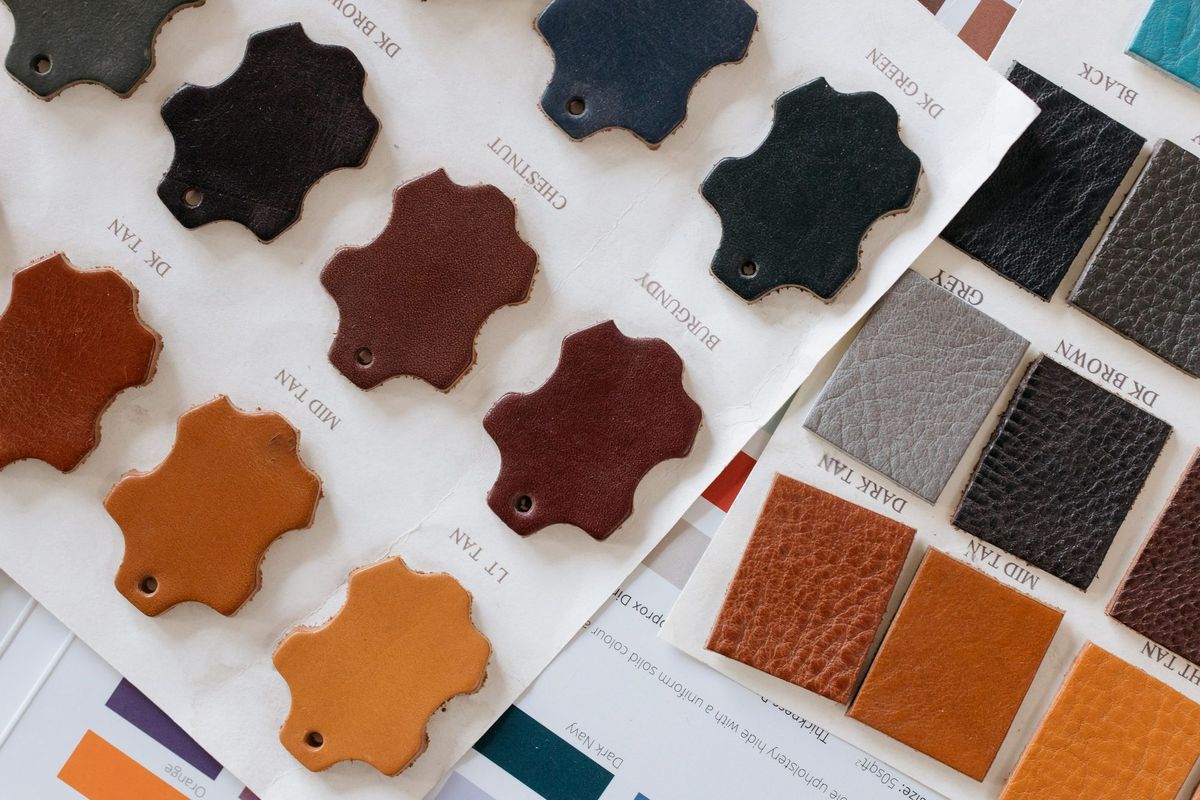
Names matter here. EN 15987 sets out the key terms of the leather trade and gives guidance on the correct use of the word "leather", and EN 16223-1 specifies how leather may be designated and described when it is used in upholstered furniture, in advertising, on labels and when the product is placed on the market.21,22 Ask the supplier what the material is under those standards before the word "leather" appears in your own catalogue.

Fire tests: EN 1021-1, EN 1021-2 and BS 5852
The two European fire tests for upholstered seating are short and specific:
- EN 1021-1 assesses the ignitability of material combinations, such as covers and fillings used in upholstered seating, when exposed to a smouldering cigarette.6
- EN 1021-2 does the same with a small flame, equivalent to a match.7
Both test only the combination of materials, not a particular finished item of furniture.6,7 That is why a fabric certificate is only as good as the filling it was tested over.
The British standard BS 5852 adds larger flaming sources. Source 5 is a wooden crib; source 7 is the flaming source used for the high-hazard categories. Clause 11 tests upholstery composites; clause 12 tests complete items of furniture and is also used for non-upholstered seating.9 BS 7176 then sets which sources a contract seat must resist: cigarette and match for low-hazard areas such as offices, plus source 5 for medium-hazard areas such as restaurants, pubs and hotel bedrooms, and source 7 for high and very high hazard.9 The contract chairs guide sets out the hazard categories in a table.
Testing the real composite
FIRA's guidance explains how fire evidence works in practice. Most fabric suppliers offer covers for low hazard, medium hazard or both, and because they do not know what filling the cover will go over, they routinely test it in combination with a 35 kg/m³ combustion-modified foam. If the chair maker uses a lower-density foam, a foam with different flame-retardant chemistry or foam from a different producer, FIRA advises direct tests on the actual upholstery combinations. Customer-supplied covers should come with documentation of their fire performance.9
The UK domestic rules are under review
Domestic upholstered furniture in the UK is covered by the Furniture and Furnishings (Fire) (Safety) Regulations 1988, which set ignition requirements for all upholstery components and labelling, and furniture that complies with them is accepted as meeting the low-hazard category of BS 7176.9 The UK government consulted on new requirements based on a smoulder test, with practical testing options and changes to the scope; the consultation ran from 31 March to 23 June 2026. As of October 2026 the outcome had not been published.23 If you supply upholstered chairs to the UK home market, watch for the response.
Repairable upholstery: designing seats that can be renewed
An upholstered seat usually wears out long before a solid wood frame does. Designing for that pays back, especially in contract use. The EU Ecolabel criteria for furniture ask for products designed for disassembly, with illustrated instructions for replacing damaged parts using basic tools; for upholstery this may include zips and hook-and-loop fastening for covers. They also ask for spare parts for at least five years and a five-year guarantee.4 A seat pad screwed to the frame from below, with a stapled or zipped cover, meets the spirit of those rules.
How we upholster chairs at SARAL
Specifying upholstery for wooden chairs: a checklist
- Use and market. Home or contract, indoor or outdoor, and the country where the chairs will be used.
- Foam. Density to EN ISO 845, hardness to EN ISO 3386-1 or EN ISO 2439, compression set and resilience, and whether it is combustion-modified.11,12,13
- Cover. Martindale cycles to EN ISO 12947-2 (or EN ISO 5470-2 for coated fabrics), pilling grade, light fastness and rub fastness.16,18
- Leather. Type and designation under EN 15987 and EN 16223-1.21,22
- Fire. EN 1021-1 and -2, or the national standard and class, tested on the actual cover and filling combination.6,7,9
- Construction. Base material, layer build-up, fixing to the frame and how the cover can be replaced.
- Customer's own material. If you supply the cover, include its fire and abrasion documentation.9
Frequently asked questions
What Martindale rating do dining chairs need?
No standard sets one figure. A European fabric maker places residential chairs at 15,000–30,000 cycles; for commercial seating, an industry guideline gives 20,000 cycles for low-traffic and 40,000 for high-traffic public spaces.3,17
What foam density is best for chair seats?
Density alone does not decide comfort or life: ask for density and hardness together, plus compression set. In one maker's data, a 38 kg/m³ foam has nearly the same hardness as a 26 kg/m³ foam but better resilience and less compression set.1 In the UK, fabric fire tests are usually run over 35 kg/m³ combustion-modified foam.9
What is the difference between EN 1021-1 and EN 1021-2?
EN 1021-1 uses a smouldering cigarette as the ignition source, EN 1021-2 a small flame equivalent to a match. Both test a combination of cover and filling, not a finished chair.6,7
Is PU-coated fabric suitable for restaurant chairs?
It can be, because it wipes clean. Check its abrasion resistance on the coated surface to EN ISO 5470-2; the EU Ecolabel criteria ask for at least 75,000 cycles, plus light fastness of 6 indoors.4,18