From log to chair: the industrial process in one view
A solid wood chair looks simple, but it is one of the most demanding products in furniture. It is small, so every defect shows. It is loaded dynamically, thousands of times a year, by people who lean back on two legs. And its joints sit exactly where the loads concentrate. Making chairs in series is therefore a chain of steps, each of which can spoil the next:
- Sawing logs into boards and drying them to a controlled moisture content.
- Optimising: cutting out knots, cracks and other defects, and cross-cutting blanks to length.
- Shaping curves by steam bending, by gluing thin laminations over a form, or by cutting curved parts from solid or glued blanks.
- Machining the parts on CNC machines: profiles, mortises, tenons, dowel holes and compound angles.
- Sanding, assembling and gluing the frame.
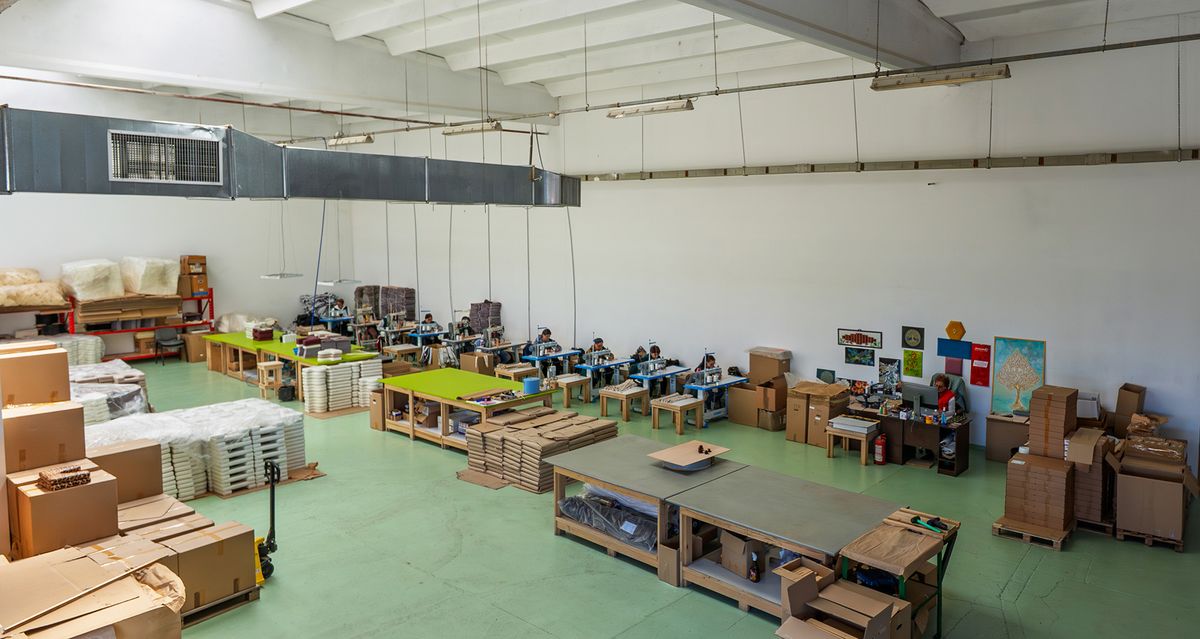
- Finishing with stain, oil or lacquer, then upholstery and final assembly.
- Quality control and packing, often flat or partly assembled.
The sections below follow that chain, then turn to the European test standards that a chair has to pass, and to the numbers on Europe's chair industry.
Choosing the species: beech, oak and ash
The modern wooden chair industry was built on beech. Michael Thonet's chair No. 14, launched in 1859, was made of six pieces of steam-bent beech, ten screws and two nuts. It was the first piece of furniture designed to be shipped in parts, and 50 million had been sold by 1930.1 Beech is still the default for chairs in Central Europe, for good reasons.
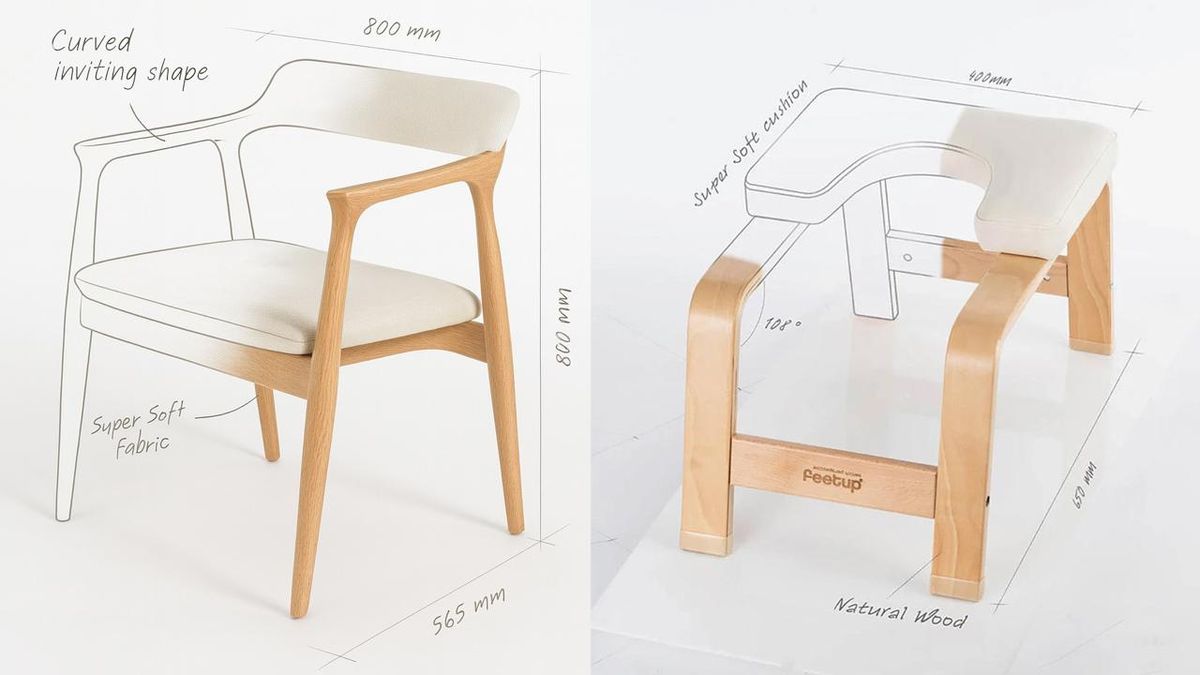
- Beech (Fagus sylvatica) is hard, strong and fine-textured. On the Janka test it scores about 6,460 N, against about 4,980 N for European oak.2 It bends well after steaming, takes stain evenly and machines to crisp edges. Its weakness is movement with humidity, which drying and design have to handle.
- Oak is chosen for its look: a strong grain, a warm colour and a premium image. It is softer than beech but moves less with changes in humidity.2
- Ash is tough and elastic, a traditional wood for bent and slender parts such as chair backs and spindles. Its Janka hardness is about 6,580 N, the highest of the three.2
The US Forest Products Laboratory lists white oak, red oak, elm, hickory, ash, beech, birch, maple, walnut, sweetgum and mahogany as the species commonly used for bent members.4 The beech wood guide and the oak, beech and ash comparison go deeper into each species.
Drying and moisture control for chair parts
A chair is a frame of small parts joined across the grain, and every joint is a place where wood with different grain directions meets. If the parts are too wet when the chair is assembled, they shrink in the heated room and the joints loosen; if they are too dry, they swell and split around the tenons. The FPL recommends that interior furniture be at an average of 8% moisture content when it is made, with individual pieces between 6% and 10%, for most of the United States.3 For heated homes and restaurants in Central Europe that target is a good starting point.
Kiln drying with equalising and conditioning at the end matters especially for chairs, because chair parts are ripped and profiled from thicker boards. Stress left in the boards makes them bow as soon as they are cut. The kiln drying guide explains the schedules.
Shaping curves: steam bending, laminating or cutting from solid
Curves are what make a chair comfortable, and there are three ways to make them.
Steam bending
Heat and moisture soften the lignin that holds wood fibres together, so the wood can be bent and then set in its new shape as it cools and dries. The FPL recommends steaming or boiling for about 15 minutes per centimetre of thickness for wood at 20–25% moisture content, and about 30 minutes per centimetre for drier wood. Steamed wood can be compressed by 25–30% along the grain but stretched by only 1–2%, so bending is done against a metal strap that keeps the outer face from stretching.4
For most chair and furniture parts, the bending stock should be at 12–20% moisture content before steaming: gently curved chair-back slats can be made from 12% stock, while severe bends over a form need 15–20%.4 After bending, the part is cooled and dried in its form until the shape is fixed.
Laminating
Thin layers of dry wood are glued together and pressed over a curved form in a single operation. Because each layer bends only slightly, no steaming is needed; laminated curves are stronger than single bent pieces, change shape less with moisture, and allow radii that a single piece could not reach.4 Bent plywood seat shells are the best-known example.
Cutting from solid
Curved back rails, arms and seat edges can also be cut from solid or edge-glued blanks on a CNC machine. This wastes more wood, because the grain runs straight through the curve and short grain at the ends weakens the part, but it needs no forms and suits small series and complex shapes.
Machining chair parts on 3- and 5-axis CNC
A chair has very few right angles. Back legs lean and curve, seat rails meet legs at compound angles, and the tenons on a splayed leg point in two directions at once. A 3-axis CNC router moves the tool along X, Y and Z, which covers flat parts, profiles and holes from one side. A 5-axis machine can also tilt and rotate the tool, so it can cut an angled mortise, contour a curved leg or shape an armrest in one clamping.
The gain is accuracy as much as speed. Every re-clamping adds a small error, and chair joints only survive fatigue testing if tenons and mortises fit consistently. The guide to CNC machining of hardwood covers tools, feeds and the special behaviour of oak.
Joints that survive fatigue testing
Chairs rarely fail by breaking in one go. They fail by fatigue: a joint that loosens a little with every lean, until the glue line cracks. The European standards judge exactly that. A chair passes when, during and after testing, no member, joint or component has fractured, no joint intended to be rigid has loosened, no major part is significantly deformed and the chair still works.5
- Mortise and tenon is the reference joint for leg-to-rail connections: a large glue surface and mechanical interlock against racking.
- Dowel joints suit series production and flat-pack chairs. Dowel diameter, length, spacing and fit decide their strength.
- Corner blocks and brackets under the seat stiffen the frame against racking, the main load when a sitter leans back.
- Screwed and bolted joints allow knock-down transport, as on the Thonet No. 14, but need locking so they do not work loose.
Glue choice matters as much as geometry: a glue line in a chair must handle cyclic loads and the moisture swings of a heated room. The guide to wood glue for hardwood explains durability classes such as D3 and D4.
Sanding, finishing and quality control
Machined parts are sanded before assembly, because the inside corners of a chair frame are hard to reach later. On beech, raising the grain with water and a light final sanding gives a smoother stained surface. Lacquer is the usual finish for contract chairs, where cleaning and abrasion resistance matter; oil and hardwax oil suit domestic chairs and a natural feel.
The European seating standards also set safety requirements beyond strength. In the 2013 edition of EN 16139, for example, accessible corners and the edges that touch the user must be rounded or chamfered, other edges free from burrs, and hollow components closed.5 Finishing and quality control are where those details are checked.
Upholstery and final assembly
Many solid wood chairs leave the factory with an upholstered seat or back. Seat pads are usually built on a plywood or solid wood base with foam and fabric or leather, and fixed to the frame with screws so they can be replaced. Upholstery adds two specification points: the fabric's abrasion resistance and its flammability. EN 12520 and EN 16139 cover neither: they exclude the durability of upholstery materials and flammability, which have their own standards.7,8
European chair standards explained
Three families of standards matter for a wooden chair sold in Europe. They are voluntary, but contracts and tenders often call them up.
EN 1728 test methods and EN 1022 stability
EN 1728 specifies the test methods for the strength and durability of all types of seating, whatever their use, material or construction. It contains no pass levels: the requirements for each end use are set in other standards.10 Stability against tipping over is tested to EN 1022.5 The requirement standards below call up these methods and set the loads and cycle counts.
EN 12520: domestic seating (2024 edition)
EN 12520 sets the minimum safety, strength and durability requirements for all types of domestic seating for adults, based on users weighing up to 110 kg. The 2024 edition replaced the 2015 one and has been valid since 15 November 2024.7 Its main changes, according to SGS, include finger-entrapment requirements, a new category for single-column seating, a higher downward static load on arm rests (750 N instead of 700 N), new seat-impact rules for height-adjustable seats and a 5,000-cycle durability test for electrically operated seating.11
The UK test house FIRA describes the combined seat-and-back fatigue test under the 2015 edition: 25,000 cycles, with 1,000 N on the seat and 300 N on the back, which takes three to four days on the rig.6 We have not seen the 2024 table, so check the current cycle counts with your test laboratory.
EN 16139: contract seating, levels L1 and L2 (2025 edition)
EN 16139 covers non-domestic seating for adults up to 110 kg: chairs for cafés, restaurants, hotels, offices (except office work chairs), public halls and similar places. The 2025 edition replaced the 2013 one and has been valid since 1 August 2025; it adds, among other things, a normative seat side-to-side durability test and a rationale for single-column seating.8
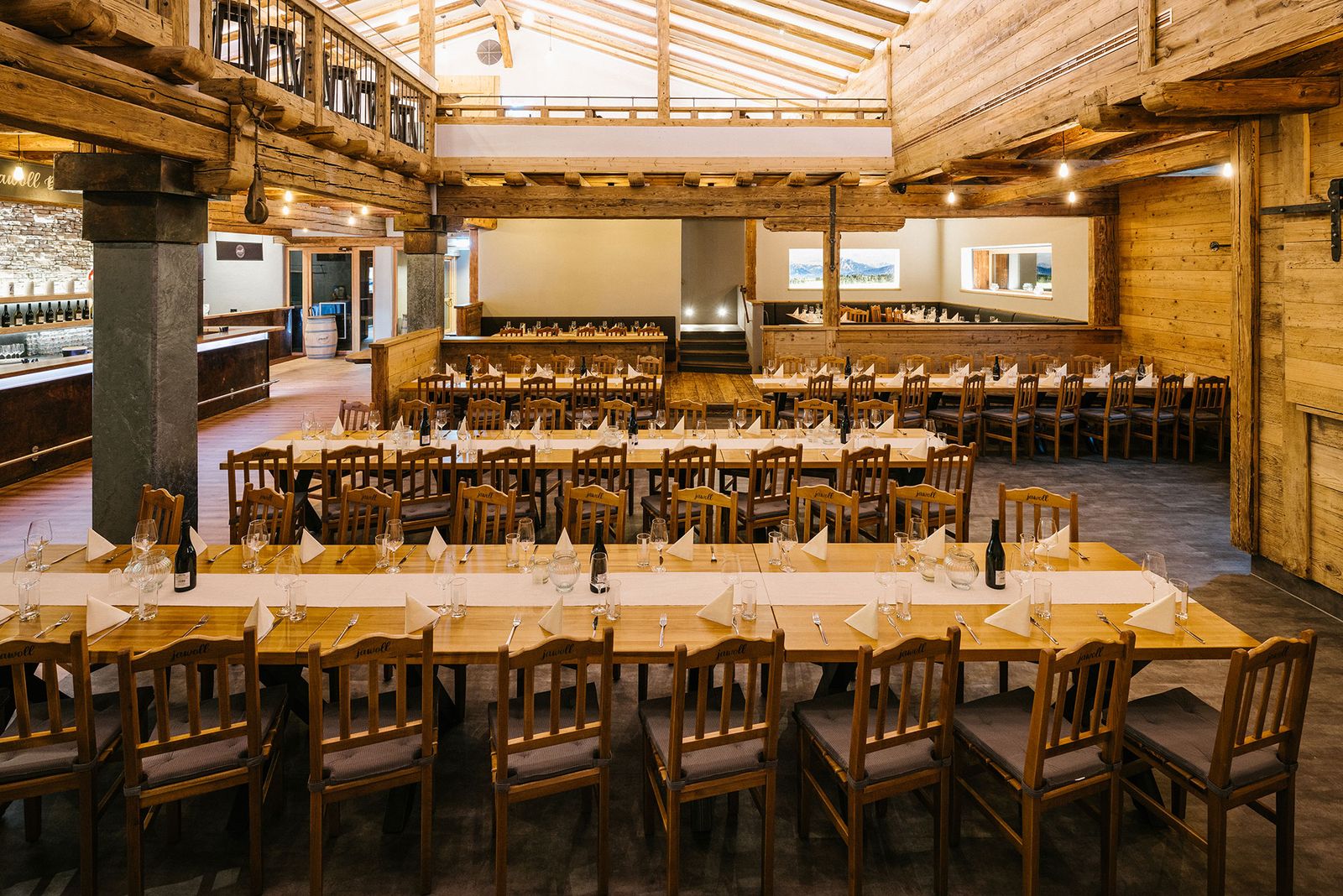
The standard has two test severity levels. L1, general use, covers offices, showrooms, public halls, cafés, restaurants, canteens, banks and bars. L2, extreme use, covers places where seating is subject to extremely high loads or misuse, such as night clubs, police stations, transport terminals, sports changing rooms, prisons and barracks.5
The cycle counts are where contract and domestic chairs part ways. In the 2013 edition, as listed in an accredited laboratory's report, the combined seat-and-back durability test runs 100,000 cycles at L1 and 200,000 at L2, with 1,000 N on the seat and 300 N on the back. The seat front edge is cycled 50,000 or 100,000 times at 800 N and the arms 30,000 or 60,000 times at 400 N.5 An independent report from the Danish Technological Institute for a sofa tested at L2 in 2019 shows the same 200,000, 100,000 and 60,000 cycles.12 On FIRA's rigs, 100,000 cycles take nine to ten days and 200,000 take fifteen to sixteen.6
Show the data
| EN 12520:2015 (domestic) | EN 16139:2013 L1 (general use) | EN 16139:2013 L2 (extreme use) | |
|---|---|---|---|
| Seat and back (1,000 N + 300 N) | 25,000 cycles | 100,000 cycles | 200,000 cycles |
| Seat front edge (800 N) | – | 50,000 cycles | 100,000 cycles |
| Arm rest (400 N) | – | 30,000 cycles | 60,000 cycles |
EN 12520 front-edge and arm values are not shown because we could not verify them from an open source. Check current editions (EN 12520:2024, EN 16139:2025) with your test laboratory. Source: Kinnarps Test and Verification Center, report 23-TA29114 (EN 16139:2013 requirements); Danish Technological Institute, report 877705-5 (L2); FIRA International (EN 12520:2015 seat and back).
Static overload tests come on top. Under EN 16139:2013 the seat takes 1,600 N at L1 and 2,000 N at L2, the seat front edge 1,300 N or 1,600 N, and the arms 400 N or 900 N sideways.5
| Test (EN 1728 method) | L1 general use | L2 extreme use |
|---|---|---|
| Seat static load, vertical | 1,600 N | 2,000 N |
| Back static load, horizontal | 560 N | 700 N |
| Seat front edge static load | 1,300 N | 1,600 N |
| Arm sideways static load | 400 N | 900 N |
| Arm downwards static load | 750 N | 900 N |
Source: Kinnarps Test and Verification Center (2023), test report 23-TA29114, requirement table of EN 16139:2013.
Because both standards have new editions, a test report to EN 16139:2013 or EN 12520:2015 describes the chair against a superseded text. Whether it is still accepted is the buyer's decision; for new tenders, ask which edition the report covers and whether the chair has been re-assessed against the changes.
Europe's chair industry in numbers
Customs statistics separate seats with wooden frames into upholstered (HS 940161) and non-upholstered (HS 940169) ones, the classic wooden chair. In 2025, Italy was the largest EU exporter of non-upholstered wooden-frame seats at €104.2 million, followed by Germany at €76.4 million, Poland at €69.2 million, Spain at €51.3 million and Romania at €48.2 million. In upholstered wooden-frame seats, Poland dominates with €2,563.7 million, ahead of Italy with €1,684.2 million.9 These are exports to all destinations, including other EU countries.
Romania's exports of non-upholstered wooden-frame seats have ranged between about €45 million and €70 million a year over the past decade, with a peak of €69.5 million in 2022. Upholstered wooden-frame seats peaked at €504.8 million in 2022 and fell to €325.6 million in 2025.9
Show the data
| Year | Upholstered (HS 940161) | Non-upholstered (HS 940169) |
|---|---|---|
| 2015 | 414.5 €m | 51.2 €m |
| 2016 | 438.0 €m | 44.7 €m |
| 2017 | 433.9 €m | 48.6 €m |
| 2018 | 387.1 €m | 49.2 €m |
| 2019 | 379.1 €m | 48.3 €m |
| 2020 | 335.9 €m | 47.9 €m |
| 2021 | 439.4 €m | 61.7 €m |
| 2022 | 504.8 €m | 69.5 €m |
| 2023 | 436.0 €m | 57.1 €m |
| 2024 | 399.8 €m | 51.9 €m |
| 2025 | 325.6 €m | 48.2 €m |
Excludes HS 940199 (non-wooden seat parts, largely automotive), which makes up most of Romania's HS 9401 total. Source: Eurostat Comext DS-045409, queried 23 October 2026.
One warning when reading Romanian figures: total exports under HS 9401, "seats", were €1,362.6 million in 2025, but more than half of that, €739.3 million, was seat parts not made of wood, largely for the car industry.9 For wooden chairs, use the 940161 and 940169 codes.
How we make solid wood chairs at SARAL
Specifying chairs or chair components: a buyer's checklist
- End use and standard. Domestic (EN 12520) or contract (EN 16139), and for contract, level L1 or L2.
- Test evidence. Which laboratory, which standard and which edition, which level, and whether the tested sample matches the chair you are buying, including species and joint design.
- Species and grade. Beech, oak or ash; steamed or unsteamed beech; accepted colour variation and knots.
- Moisture content. Target and tolerance for the parts at assembly, about 8% for heated interiors.3
- Construction. Solid, laminated or bent parts; joint types; glue durability class.
- Finish. Lacquer, oil or stain; colour reference; resistance to cleaning agents for contract use.
- Upholstery. Foam density, fabric or leather, abrasion resistance and the flammability standard your market requires.
- Packaging and delivery. Assembled or knock-down, stackability, carton specification and pallet pattern.
- Components only. If you assemble yourself, send drawings or 3D files with tolerances, and agree on how parts are measured on arrival.
Frequently asked questions
What is the difference between EN 12520 and EN 16139?
EN 12520 covers domestic seating, EN 16139 covers non-domestic seating such as restaurant, hotel and office visitor chairs. Both assume users up to 110 kg, but the contract standard requires far more fatigue cycles: under EN 16139:2013, 100,000 seat-and-back cycles at L1 and 200,000 at L2, against 25,000 that FIRA quotes for EN 12520:2015.5,6,7,8
Which wood is best for solid wood chairs?
Beech is the classic choice: hard, strong and good for bending, as Thonet's chairs showed.1,2 Ash is tougher and suits bent and slender parts; oak is chosen mainly for its look and moves less with humidity.2
What does L2 mean for a chair?
L2 is the "extreme use" test level in EN 16139, for places where seating is subject to very high loads or misuse, such as night clubs, transport terminals or prisons. Restaurants, cafés, hotels and offices fall under L1.5
Are chair test reports to EN 16139:2013 still valid?
The 2013 edition has been replaced by EN 16139:2025.8 An old report still describes how the chair performed, but it refers to a superseded standard. Many buyers accept it for existing products; for a new tender, ask the buyer which edition they require.