


Solid wood stair treads, stairs and balustrades
For more than 20 years we have made stair treads and stair parts for companies that build staircases: treads, stairs, balusters and handrails in solid oak, ash and beech, made to order at our factory in Bălțați, Romania.
The parts go through the same steps as every SARAL product: sawing on our own band sawmill, controlled drying in our kilns, optimisation to remove defects, edge gluing into panels and machining on 3- and 5-axis CNC machines.
We work mainly in oak, ash and beech; through our supplier network we can source other species on request. We machine the parts to size from your drawing, deliver them raw or finished (sanded and oiled or lacquered, ready to fit) and pack them on our own packaging line.
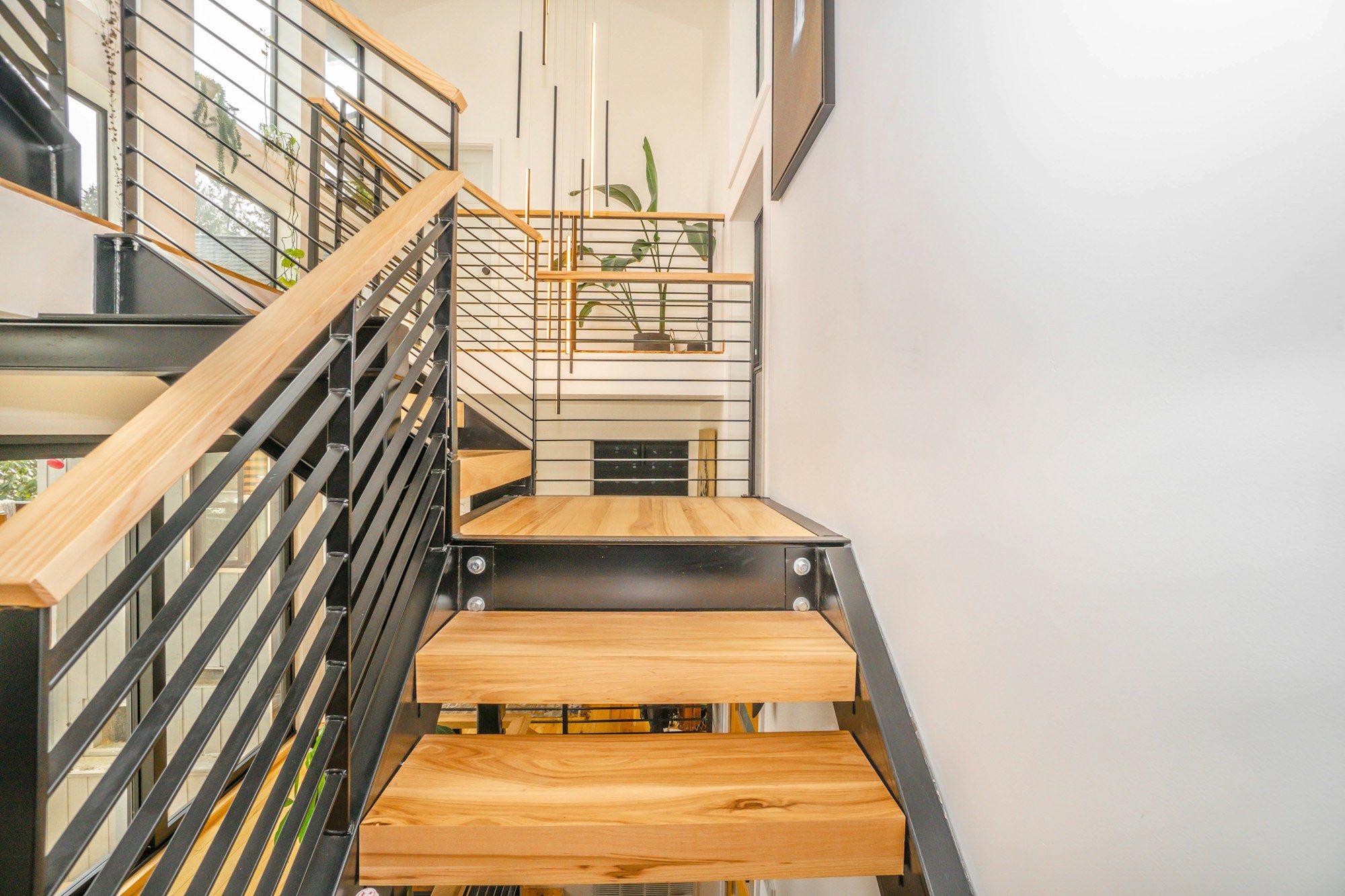
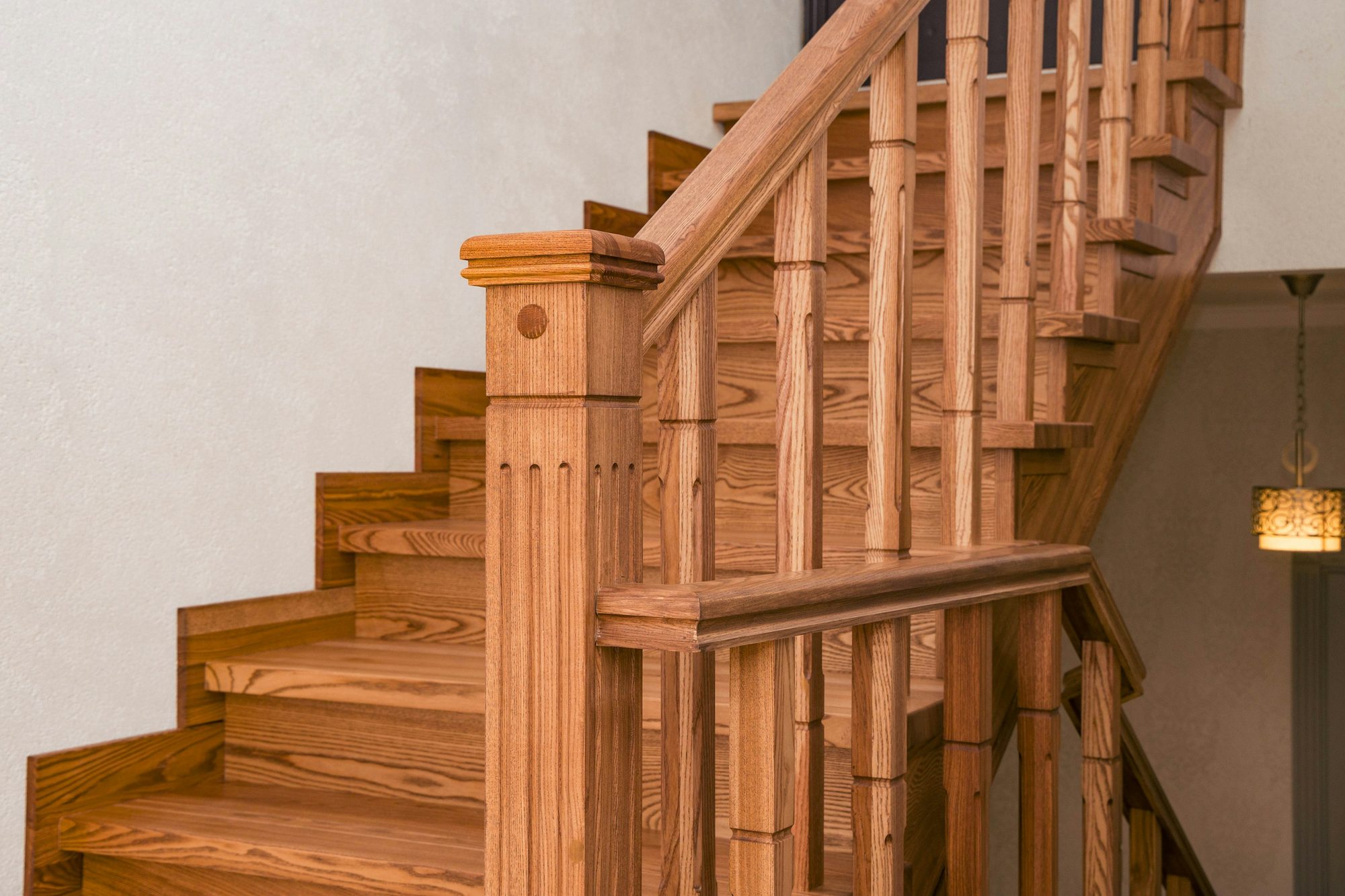

Stair treads and balustrades made to order: you choose the species, profile and dimensions.
Send us your drawing or parts list and the quantity, and we will prepare a quote.
Stair treads & balustrades
From the log to ready-to-fit parts, in one factory
We control every step, from sawing to packing, so the treads stay flat and stable and the balusters and handrails are machined to the drawing of your staircase.
Why drying and gluing matter for stair treads
A tread made from insufficiently dried wood can shrink, crack or cup after fitting, especially above underfloor heating.
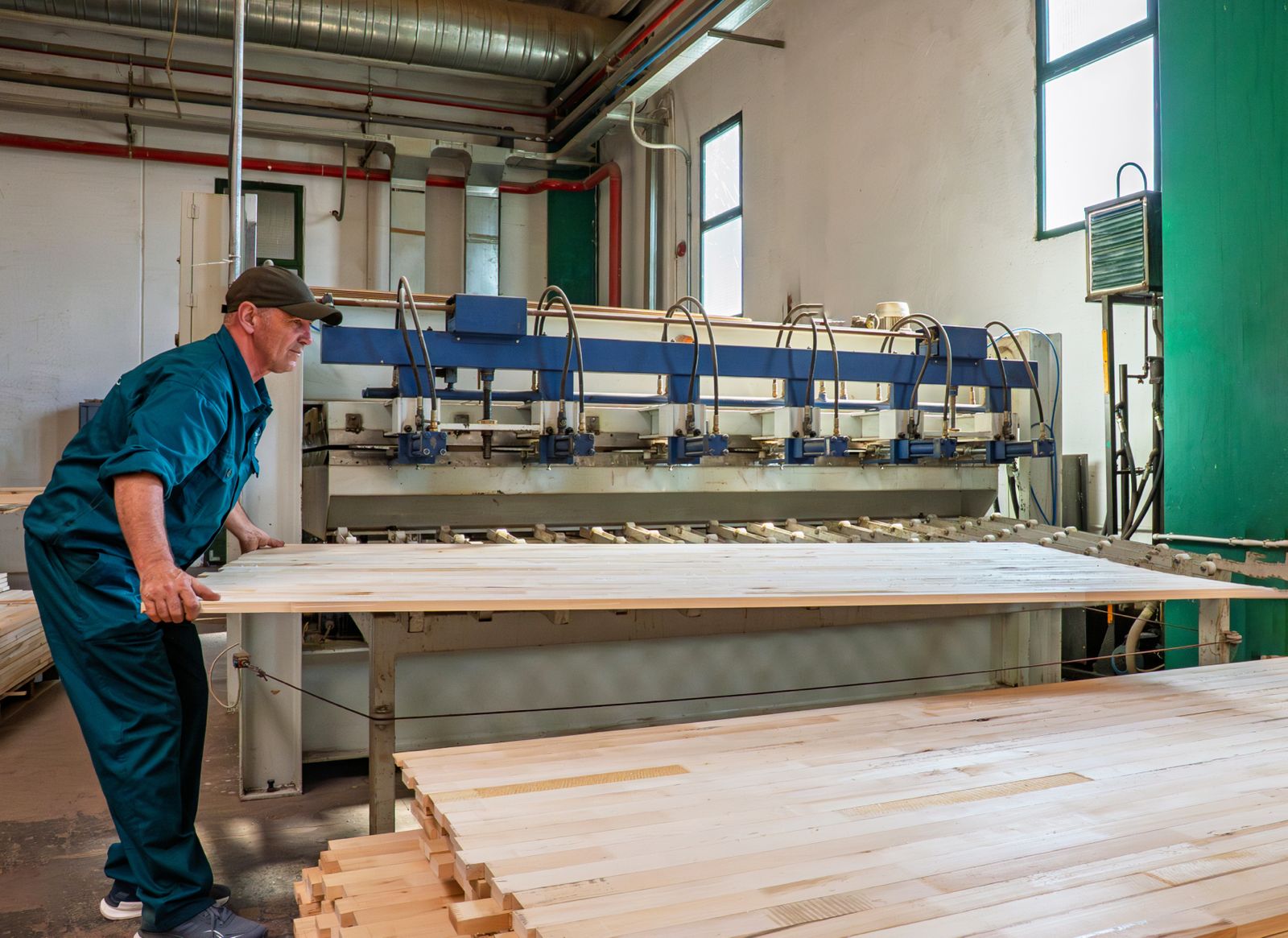
We dry the timber in kilns with controlled temperature and humidity, with schedules matched to the species and thickness, then glue it up from full-length or finger-jointed lamellas on our own panel press.
What to send us for a quote
The species, the number and size of the treads (length, width, thickness), the lamella type, the nosing profile, the baluster and handrail design (a photo, a sample or a drawing) and the quantity.
We pack the parts on our own packaging line and organise transport within Romania and abroad.
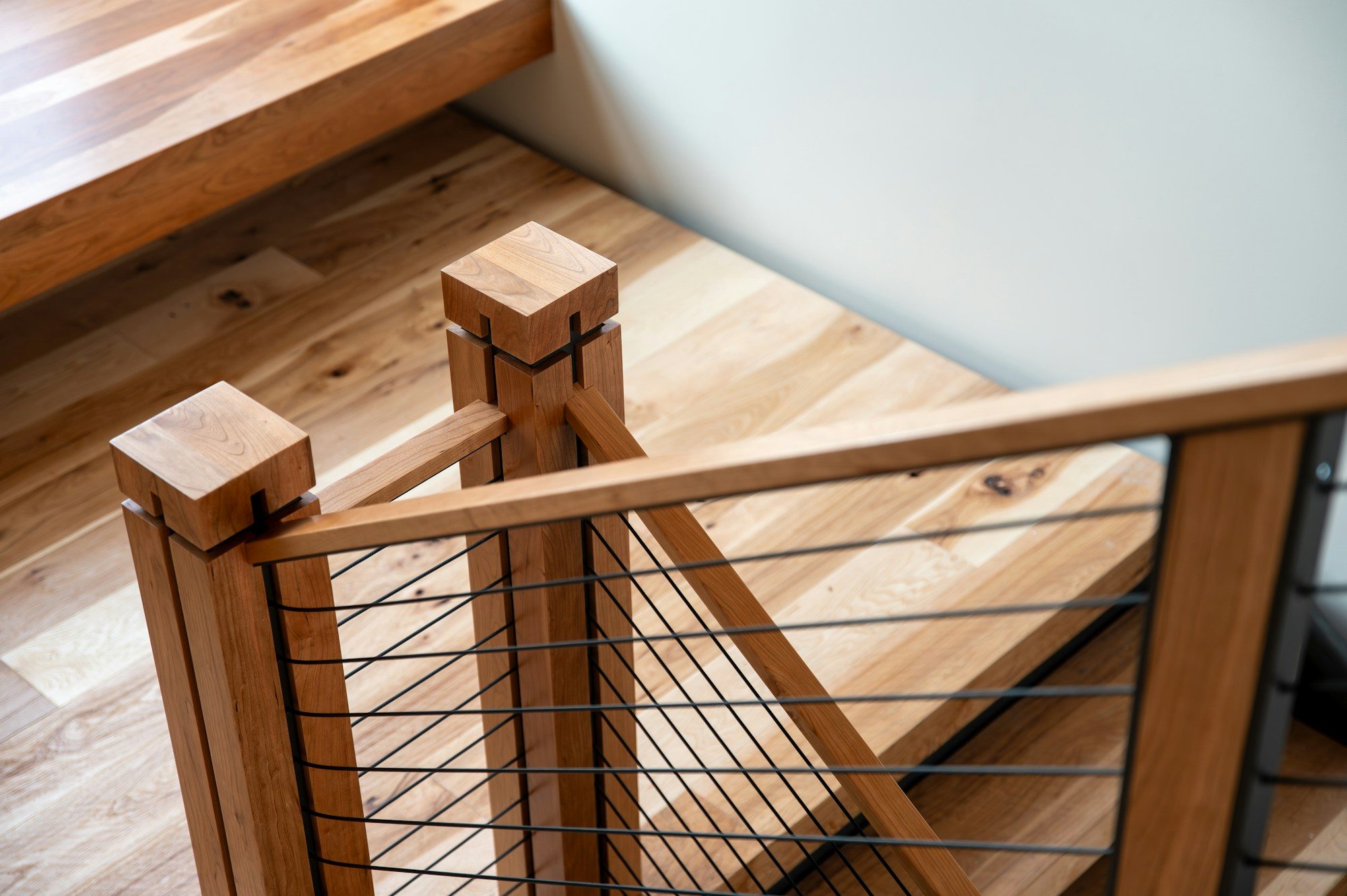
Solid wood stair treads, balusters and handrails: species, construction and ordering
We make stair treads, balusters and handrails in solid oak, ash and beech for stair builders, joinery shops, contractors, developers and furniture makers. Our guides to oak stair treads and wooden balustrades and handrails cover each choice below in depth.
What we make for stair builders and stair shops
We supply stair builders, metal-stair makers, joinery shops and stair-tread retailers with the wooden parts of a staircase, made to their list or drawing and packed per staircase. Typical orders:
| Part | How we make it | What you specify |
|---|---|---|
| Straight stair treads | Edge-glued from full-length or finger-jointed lamellas in oak, ash or beech | Thickness (40 mm is common), length and depth: standard sizes or each tread to its own size |
| Winder treads and quarter landings | Cut on our 3- and 5-axis CNC machines from your DXF/CAD drawing or template, each marked with its position | A drawing or template per tread, the finished going and the nosing overhang |
| Risers | Solid wood in the same species and grade as the treads | Thickness, height and length |
| Landings | Edge-glued panels cut to size | Size and any notches for posts or walls |
| Tread blanks | Oversize edge-glued boards for workshops that cut treads on site | Length, depth, thickness and quantity |
| Handrails | Solid or laminated, profiled to your drawing | Profile (rectangular, round or mushroom), length, groove for a flat bar or glass |
| Balusters and newel posts | Square or profiled, to your drawing | Section, length and the joint to rail and tread |
| Samples | In each species and grade you are considering | Species, grade and finish |
Options on every part: a clean or a rustic grade (knots and colour variation allowed), a square, chamfered or radiused nosing, anti-slip grooves milled into the tread, notches for balusters and posts, and the surface: raw, for the craftsman to finish on site, or finished to final size, sanded and oiled or lacquered, ready to fit. We have delivered to customers in Germany and Austria since 2010; orders travel by truck, packed per staircase so that each set arrives complete.
Working with stair-tread retailers and stair builders
For more than 20 years we have made stair treads and stair parts, such as balusters and handrails, for companies that build staircases. We buy the logs, saw them, air-dry and then kiln-dry the boards in our four kilns (up to 320 m³ at a time) and do every further step in-house, so one supplier covers the chain from the log to the packed tread.
- Volumes: regular weekly deliveries, planned with you and growing with your orders.
- Packaging: packed per staircase or per piece, including packaging suitable for online retail, which we already supply for several customers.
- Origin: our logs come from Romanian state forests managed by Romsilva; the origin of every batch is recorded in SUMAL, Romania's national timber-tracking system, and we provide the documents.
- Prices, minimum quantities and lead times: quoted per order from your specification (dimensions, thicknesses, grades and surfaces), the quantities and the order frequency. Drying takes the time the species and thickness need, and we do not shorten it.
- Samples and visits: we recommend starting with a sample order, and you are welcome to visit the factory.
Oak, ash or beech
On the Janka test, European ash (about 6,580 N) and beech (about 6,460 N) are harder than oak (about 4,980 N). Oak earns its place differently: it moves less than beech, its open grain hides wear and it matches oak floors. Beech takes stain and paint well, but it has the highest tangential shrinkage of the three (11.7% against 8.4% for oak) and needs tighter moisture control. Ash is hard, tough and light, with a grain much like oak's. The oak, beech and ash comparison has the data.
Outdoors, only oak heartwood is naturally durable (EN 350 class 2); beech and ash are class 5 and stay indoors unless modified. Seal all end grain: in an FPL study of a 25-year-old porch railing, balusters with primed end grain were perfect and those without had rotted. Use stainless steel fixings.
How treads are built
Wide boards cup and split, so treads are glued edge to edge from narrower lamellas. Full-length lamellas run the whole tread and show unbroken grain. Finger-jointed lamellas join short, defect-free pieces end to end, cost less and show fine zigzag joints. A well-made finger joint reaches up to 90% of the tensile strength of clear wood, and measured industrial beech joints about 64–72% (see how strong finger joints are). For long, highly stressed parts, ask for full-length lamellas or test data.
No standard gives thickness against span: it is a structural calculation under EN 16481. Stiffness rises with the cube of thickness, so a 50 mm tread is about 1.95 times stiffer than a 40 mm one. Cantilevered treads need an engineer. Nosing rules are national: in Germany, open stairs without risers should have a nosing overlap of at least 30 mm (DIN 18065).
Fit treads and balustrade parts at the moisture they will live at, after screed and plaster have dried: a turned baluster fitted wet shrinks in its hole and rattles (see equilibrium moisture content).
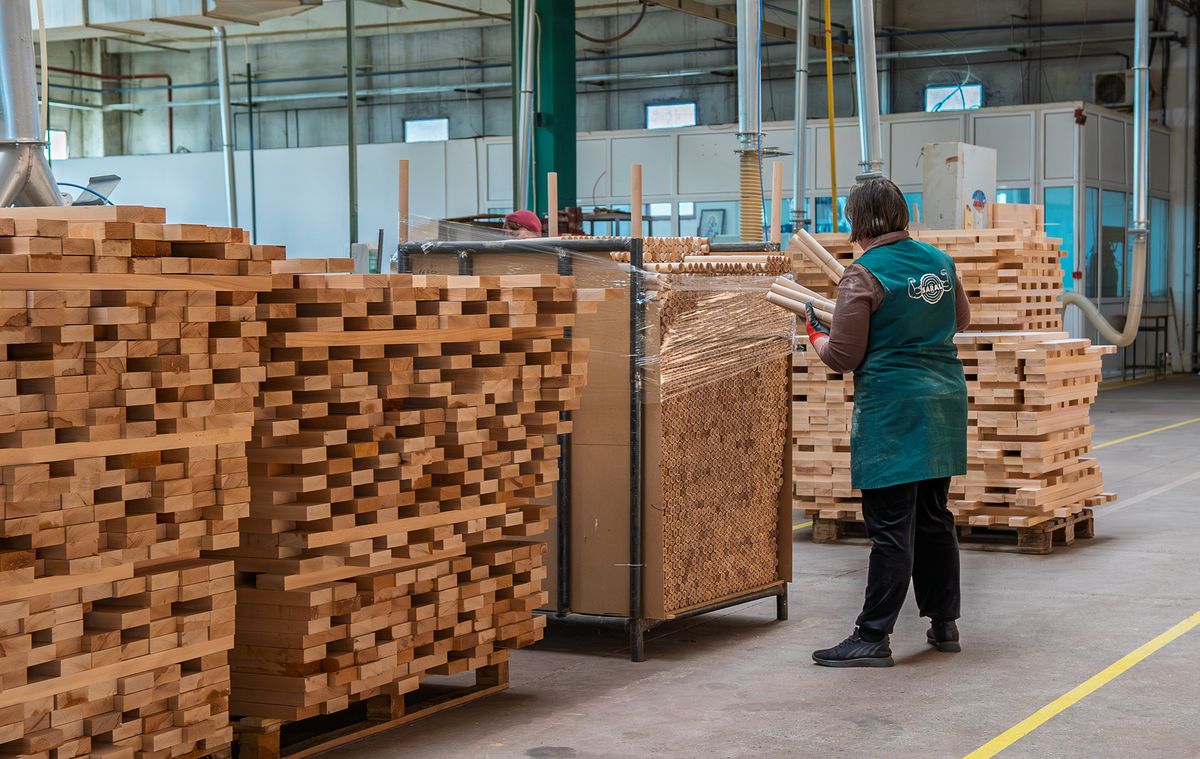
Balusters, handrails and joints
Balusters, turned or square, are set into drilled holes or a groove with spacer fillets. Newel posts carry most of the load and need a bolted or tenoned connection to the structure; glue alone is not a fixing. Laminated handrails and posts stay straighter than solid ones; ask for the adhesive class. Barrier heights and openings are national, and we work to the designer's drawings:
| Country and rules | Barrier height on stairs | Largest opening | Handrail height |
|---|---|---|---|
| England (Approved Document K) | 900 mm in dwellings | 100 mm sphere must not pass | 900–1,000 mm |
| Germany (state codes, e.g. NRW; DIN 18065) | 0.90 m up to a 12 m drop, 1.10 m above | 12 cm in many states | 80–115 cm |
| Austria (OIB Guideline 4) | 0.90 m on stairs inside a dwelling, otherwise 1.00 m | 12 cm | 85–90 cm |
| Romania (NP 068-02) | Set by the project designer | ||
Oil or lacquer
Hardwax oil penetrates and leaves an open surface, so a worn walking line can be re-oiled locally. Lacquer needs little care, but once worn through, the whole tread must be sanded and recoated (see oil vs lacquer). Finish all faces, and ask for a slip-resistance value: on the German ramp test, R9 is the lowest class.
What to send for a quote
- The country where the stair is built, and who signs off the design.
- Species, visual grade and construction: full-length or finger-jointed lamellas.
- A tread list with dimensions, finished going, nosing profile and overhang, and notches; DXF drawings help.
- Baluster section or turning drawing, handrail profile, barrier height and largest opening.
- Moisture at delivery with a tolerance, finish, fire class if needed, quantities and packing per staircase.
Frequently asked questions
Which wood is best for stair treads: oak, beech or ash?
All three work indoors. Beech and ash are harder (Janka about 6,460 N and 6,580 N, against 4,980 N for oak); oak moves less, has durable heartwood and matches oak floors, so it is the safer choice next to an oak floor or over underfloor heating.
Are finger-jointed stair treads strong enough?
For most stairs, yes: a well-made finger joint reaches up to 90% of the tensile strength of clear wood, and the difference is mainly visual. For cantilevered or long free-spanning treads, ask for full-length lamellas or test data, and have the stair calculated.
What moisture content should stair treads have at delivery?
For heated interiors, about 8% on average, with single pieces between 6% and 10%. Store them in the finished building and fit them only after screed and plaster have dried.
How high must a stair balustrade be, and how wide may the gaps be?
It depends on the country. In an English dwelling the guarding is 900 mm on stairs and no opening may pass a 100 mm sphere; in Austria it is 0.90 m on stairs inside a dwelling, with openings of at most 12 cm. In Romania the project designer sets heights and gaps under NP 068-02.
Can wooden balusters and handrails be used outdoors?
Yes, in oak heartwood or modified wood, not in untreated beech or ash. Seal all end grain before assembly, shape the rails to shed water and use stainless steel fixings.
Can you make winder treads and landings from our drawings or templates?
Yes. Send a DXF or CAD drawing, or a template, for each tread; we cut winders and landings on our 3- and 5-axis CNC machines and mark every part with its position in the staircase.
Do you supply stair builders and retailers outside Romania?
Yes. We have delivered to customers in Germany and Austria since 2010. We quote per staircase or per batch, send samples before a first order and ship by truck, packed per staircase.
What is the minimum order, and how long does production take?
We set minimum quantities, prices and lead times per order, from your specification, the quantities and how often you order. Drying needs a minimum time that depends on the species and thickness, so we suggest starting with a sample order.
Where does your wood come from, and can you document its origin?
Our logs come from Romanian state forests managed by Romsilva. The origin of every batch is recorded in SUMAL, Romania's national timber-tracking system, and we provide the documents.
What our partners say
about SARAL
Our work speaks for itself, but trust is built over time.
Our International Outreach
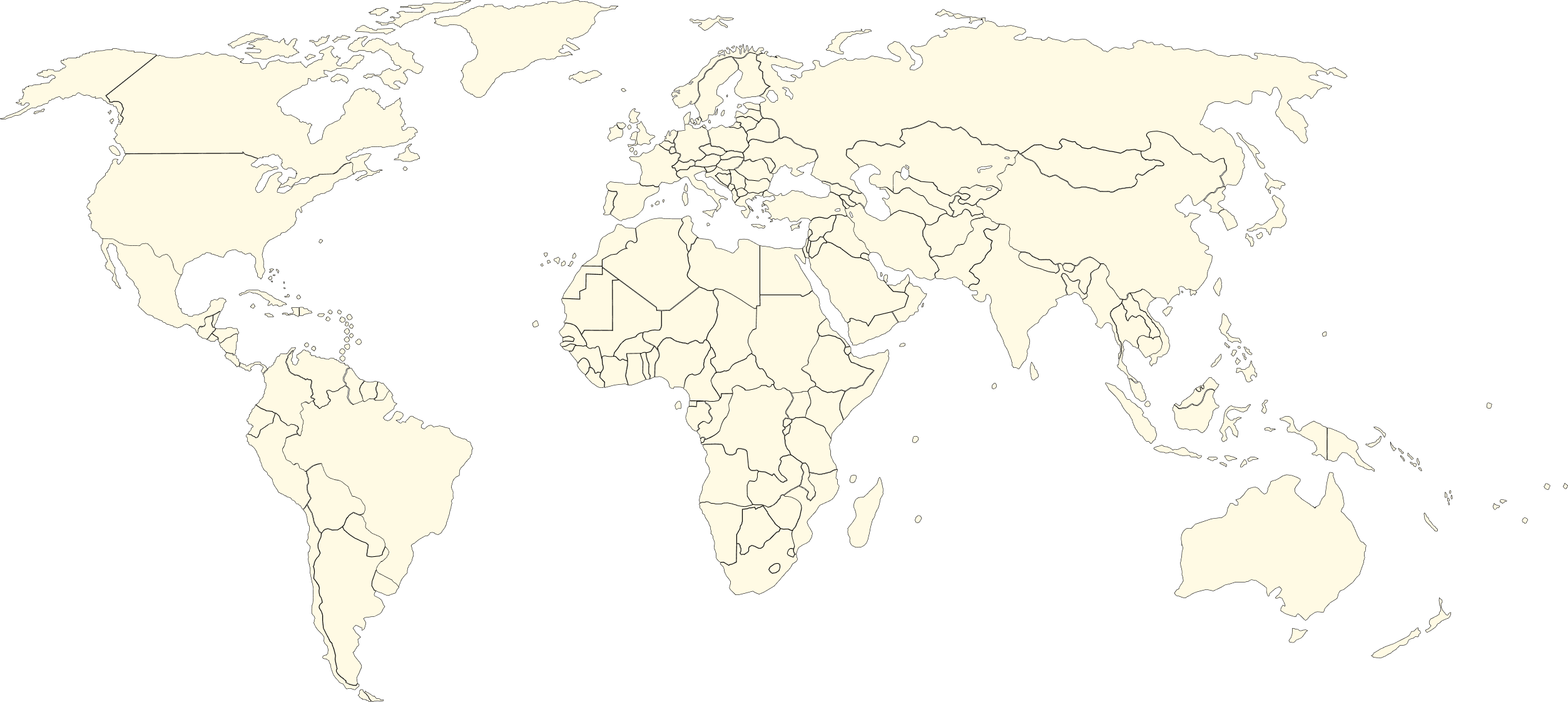
Local manufacturing, global delivery
We manufacture in Romania and proudly export to partners around the world.
Why choose SARAL?
Our expertise is always at your disposal.
We don’t cut corners: we go the extra mile for the best result and deliver what we agree.

25+ years and counting
We have processed hardwood in Bălțați since 1998, from the log to the finished product.

Premium results
We find quality where good materials, efficient processes and skilled people meet.

Concept to product
Our team will turn your raw idea into reality — fast, scalable, and repeatable.

Efficient production
We buy logs from forest owners, dry them in our own kilns and process them on one site; our 2023 modernisation focused on energy efficiency.
WANT TO HAVE A CHAT?
We are here for you – let’s talk Business
Whether you have a simple question or want to develop a new idea, we might be the partner you were looking for.